HomeAll BattlesHistorical Periods
  1. Home
  2. ›
  3. World War II
  4. ›
  5. Prague Offensive — Romanian Armies

Prague Offensive — Romanian Armies(1945)

Explore on Interactive Map
May 6–11, 1945·Romania / Soviet Union victory·land·Bohemian basin, rolling countryside, city of Prague on Vltava

Background

By the beginning of May 1945, Germany had been decisively defeated by the coalition of the Western Allies and the Soviet Union. Germany's capital, Berlin, was on the verge of capitulation in the face of a massive Soviet attack and the great bulk of Germany had been conquered. However, in southeastern Germany, parts of Austria and Czechoslovakia, there were still large bodies of active German troops of Army Group Centre and the remnants of Army Group Ostmark. On 2 May 1945, Generaloberst Alfred Jodl, Chief of Staff of Oberkommando der Wehrmacht, ordered the German forces to avoid being captured by Russia and facilitate separate negotiation with Western Allies. The German remnant forces continued to resist the USSR 4th and 1st Ukrainian Fronts while only accepting an armistice on the Western Front. The Nazi regime considered Czechoslovakia and neighboring areas as their last bastion in the event that Berlin fell. Therefore, in 1945 they concentrated many powerful military units in the region, including elements of 6th SS Panzer Army, 1st and 4th Panzer Armies, and 7th, 8th and 17th Combined Armies.

Campaign: Romanian Advance West 1944-45

Forces Engaged
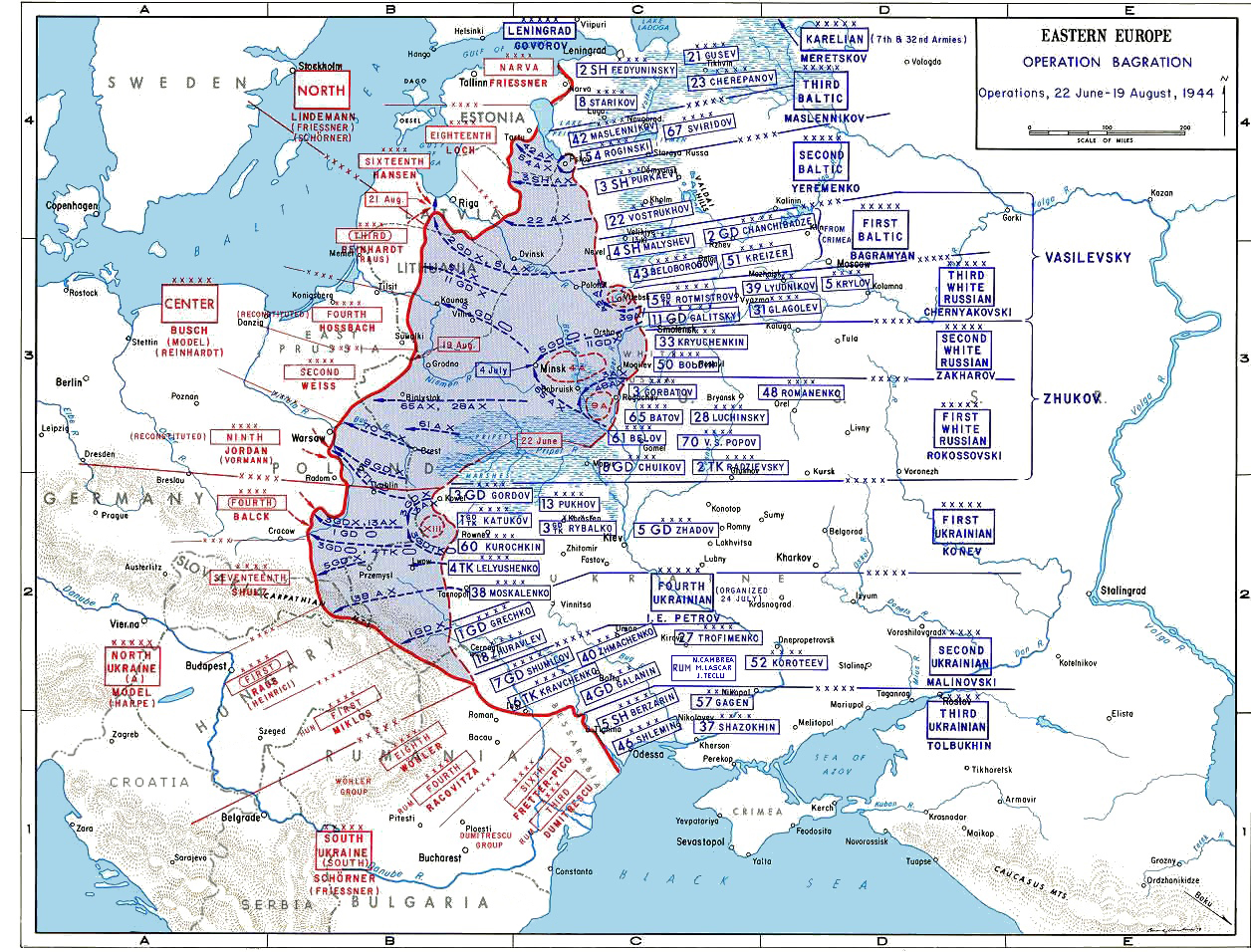
World War II photograph — Eastern Front operations related to Prague Offensive — Romanian Armies (1945)
World War II photograph — Eastern Front operations related to Prague Offensive — Romanian Armies (1945) (c. 1945) — United States Army. Public domain.
Victor
Romania / Soviet Union
Commander: Ivan Konev
Strength: 2,000,000
Defeated
Germany (Army Group Centre)
Commander: Ferdinand Schörner
Strength: 900,000

The Battle

World War II photograph — Eastern Front operations related to Prague Offensive — Romanian Armies (1945)
World War II photograph — Eastern Front operations related to Prague Offensive — Romanian Armies (1945) (c. 1945) — Anton Gutsunaev. CC BY 3.0.

Romanian 1st and 4th Armies participated in the final major European operation. The war ended May 12 near Šternberk.

The Prague offensive was the last major military operation of World War II in Europe. The offensive was fought on the Eastern Front from 6 May to 11 May 1945. Fought concurrently with the Prague uprising, the offensive significantly helped the liberation of Czechoslovakia in 1945. The offensive was one of the last engagements of World War II in Europe and continued after Nazi Germany's unconditional capitulation on 8/9 May.

Casualties & Outcome

2,000
Romania / Soviet Union
casualties
?
Germany (Army Group Centre)
casualties

~1,500 killed, ~500 wounded (Soviet/Romanian after May 8); ~860,000 captured (German Army Group Centre)

Romania / Soviet Union achieved victory over Germany (Army Group Centre).

upright|To honor the participants of the operation, the Soviet Union instituted the Medal "For the Liberation of Prague". The Prague Offensive destroyed Army Group Centre and parts of Army Group Ostmark. These army groups were the last large intact military formations of Germany, and following the offensive, all surviving German soldiers became prisoners of war or fugitives. The number of German prisoners taken by the Soviet Union reached almost 900,000 and other Axis soldiers, numbering at least in the tens of thousands, surrendered to U.S. forces in western Czechoslovakia and Austria, although numbers of these were later turned over to the Soviet Union. Czechoslovakia was free of the German occupation regime for the first time since late 1938. The country's prewar borders, however, would not be completely restored as the Soviets engineered the cession of Carpathian Ruthenia to the USSR in July 1945.

Historical Record

The Blue Marble, by Apollo 17, AS17-148-22727.
The Blue Marble, by Apollo 17, AS17-148-22727. (c. 1972) — Harrison Schmitt / Apollo 17. Public domain.
proglas oslobođenja Čehoslovačke, u Drugome svjetskom ratu, izložen u bratislavskom dvorcu
proglas oslobođenja Čehoslovačke, u Drugome svjetskom ratu, izložen u bratislavskom dvorcu (c. 2025) — August Dominus. CC0.
Soviet tank troops (Battle of Budapest, October 1944)
Soviet tank troops (Battle of Budapest, October 1944) (c. 1944) — fotoreporter sovietico sconosciuto. Public domain.
Honorary burial site of Red Army soldiers fallen during liberation of Prague in May 1945, military section of Olšany Cemetery in Prague, Czech Republic.
Honorary burial site of Red Army soldiers fallen during liberation of Prague in May 1945, military section of Olšany Cemetery in Prague, Czech Republic. (c. 2009) — User:Miaow Miaow. Public domain.
Gottgetreu (Fürstenau)
Gottgetreu (Fürstenau) (c. 2006) — Jens Jäpel. CC BY 2.5.
One of memorials of the Dukla Pass battle of 1944, near Ladomirova, on the Slovak side of the Dukla Pass.  A German Pz-IV J (left) together with a Soviet T-34-85.
One of memorials of the Dukla Pass battle of 1944, near Ladomirova, on the Slovak side of the Dukla Pass. A German Pz-IV J (left) together with a Soviet T-34-85. (c. 2006) — PM (talk). Public domain.
Demarcation line between the Soviet and American armies, May 1945.
Demarcation line between the Soviet and American armies, May 1945. (c. 2020) — Jirka.h23. CC BY-SA 4.0.
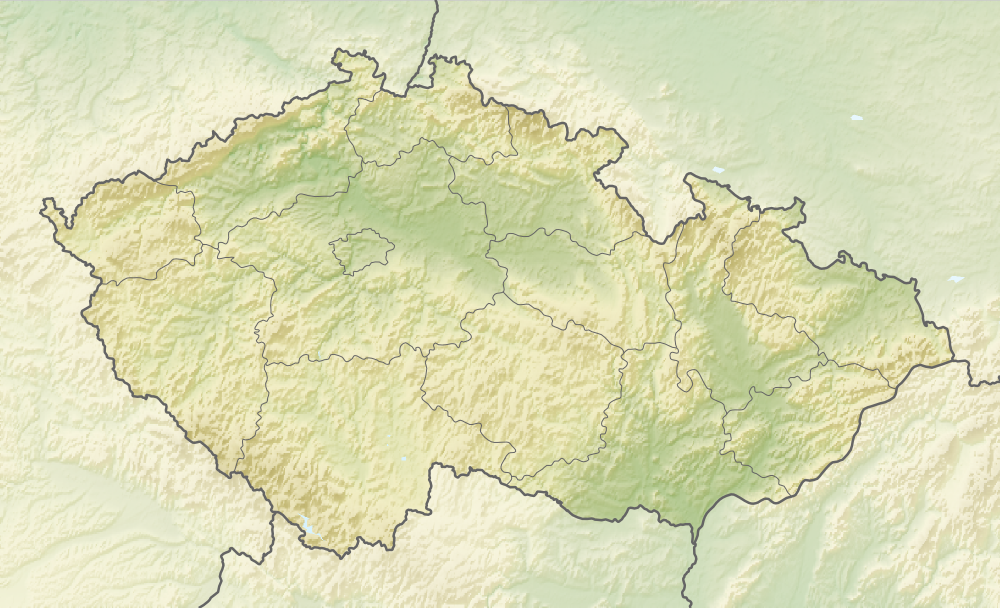
Relief map of the Czech Republic
Relief map of the Czech Republic (c. 2010) — derivative work Виктор_В. CC BY-SA 3.0.
The Blue Marble, by Apollo 17, AS17-148-22727.
The Blue Marble, by Apollo 17, AS17-148-22727. (c. 1972) — Harrison Schmitt / Apollo 17. Public domain.
proglas oslobođenja Čehoslovačke, u Drugome svjetskom ratu, izložen u bratislavskom dvorcu
proglas oslobođenja Čehoslovačke, u Drugome svjetskom ratu, izložen u bratislavskom dvorcu (c. 2025) — August Dominus. CC0.
Soviet tank troops (Battle of Budapest, October 1944)
Soviet tank troops (Battle of Budapest, October 1944) (c. 1944) — fotoreporter sovietico sconosciuto. Public domain.
Honorary burial site of Red Army soldiers fallen during liberation of Prague in May 1945, military section of Olšany Cemetery in Prague, Czech Republic.
Honorary burial site of Red Army soldiers fallen during liberation of Prague in May 1945, military section of Olšany Cemetery in Prague, Czech Republic. (c. 2009) — User:Miaow Miaow. Public domain.
Gottgetreu (Fürstenau)
Gottgetreu (Fürstenau) (c. 2006) — Jens Jäpel. CC BY 2.5.
One of memorials of the Dukla Pass battle of 1944, near Ladomirova, on the Slovak side of the Dukla Pass.  A German Pz-IV J (left) together with a Soviet T-34-85.
One of memorials of the Dukla Pass battle of 1944, near Ladomirova, on the Slovak side of the Dukla Pass. A German Pz-IV J (left) together with a Soviet T-34-85. (c. 2006) — PM (talk). Public domain.
Demarcation line between the Soviet and American armies, May 1945.
Demarcation line between the Soviet and American armies, May 1945. (c. 2020) — Jirka.h23. CC BY-SA 4.0.
Relief map of the Czech Republic
Relief map of the Czech Republic (c. 2010) — derivative work Виктор_В. CC BY-SA 3.0.

Significance & Legacy

Last engagement of Romanian forces in WWII — V-E Day found them in Czechoslovakia.

Frequently Asked Questions

When was the Prague Offensive — Romanian Armies?
The Prague Offensive — Romanian Armies took place in 1945. May 6–11, 1945.
Who won the Prague Offensive — Romanian Armies?
The Romania / Soviet Union were victorious against the Germany (Army Group Centre).
What was the significance of the Prague Offensive — Romanian Armies?
Last engagement of Romanian forces in WWII — V-E Day found them in Czechoslovakia.

Related Battles

Battle of Bucharest1944 · Romania victoryBattle of Păuliș1944 · Romania / Soviet Union victoryBattle of Turda1944 · Romania & USSR victoryOperation München — Recapture of Bessarabia1941 · Romania / Germany victorySiege of Odessa1941 · Romania victoryBattle of the Kerch Peninsula1942 · Romania / Germany victory
View all World War II battles →

Sources

  • Axworthy, M. — Third Axis, Fourth Ally
  • Glantz, D. — Red Storm Over the Balkans
Wikipedia (English)← Back to Atlas