Siege of Odessa(1941)
Exact site. The pin marks a documented battlefield location rather than a broad area.
Odessa city/port, Ukraine
Coordinate source: Standard GPS Odessa
Background
Antonescu insisted Odessa be captured by Romanian forces alone, without German help, to establish military credibility with Berlin and justify post-war territorial claims. The decision prolonged the siege and multiplied casualties.
Campaign: Operation Barbarossa — Southern Sector
Forces Engaged

The Battle

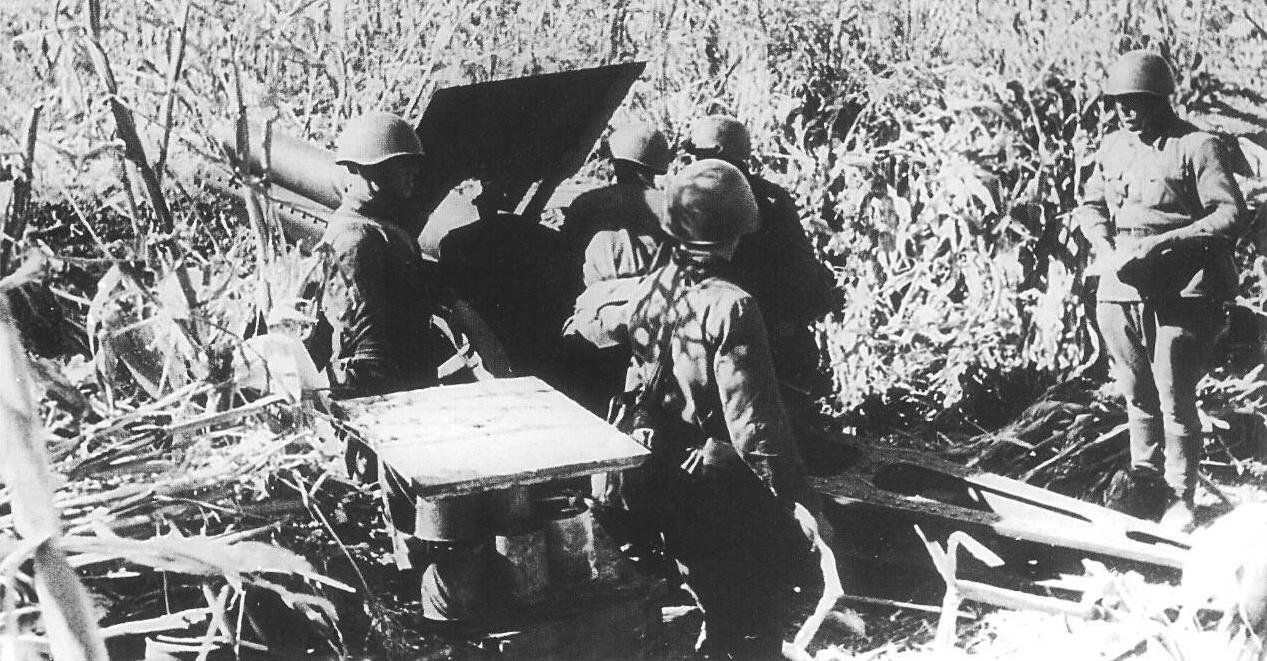
Romanian 4th Army besieged the fortified Black Sea port for 73 days. The Soviet garrison evacuated to Sevastopol.
The siege of Odessa, known to the Soviets as the defence of Odessa, lasted from 8 August until 16 October 1941, during the early phase of Operation Barbarossa, the Axis invasion of the Soviet Union during World War II.
“"The smell of the dead in the sunflower fields under the Odessa sun is something one never forgets." — Romanian subaltern, cited in Axworthy
Casualties & Outcome
17,729 killed, 63,345 wounded, 11,471 missing (Romanian total: 92,545); ~41,268 total (Soviet)
Romania achieved victory over Soviet Union.
Parade organized at Arcul de Triumf for the return of the Romanian troops from Odessa in November 1941 The operations at Odessa highlighted significant weaknesses in the Romanian Army, leading both military and political leaders in the country to call for a discontinuation of military operations against the Soviet Union. Antonescu ignored such objections, regarding continued participation and eventual victory on the Eastern Front as necessary for the restoration of Romania's territorial integrity. On the other hand, the capture of Odessa enabled Antonescu to surpass Mussolini in prestige, as the latter had no comparable spoils. Odessa was the most important wartime conquest – without substantial German support – by any of the minor European Axis powers. The siege of Odessa partly overlapped with the Battle of Kiev (7 July – 26 September 1941).
Historical Record





Significance & Legacy
Largest independent military operation ever undertaken by a minor Axis power.
It is considered to be the "greatest independent success of the war by any minor Axis power".
Frequently Asked Questions
- When was the Siege of Odessa?
- The Siege of Odessa took place in 1941. Aug 8–Oct 16, 1941.
- What was the outcome of the Siege of Odessa?
- The Romania were victorious against the Soviet Union.
- What was the significance of the Siege of Odessa?
- Largest independent military operation ever undertaken by a minor Axis power.