HomeAll BattlesHistorical PeriodsMethodologyBattle of Posada (1330)Battle of Vaslui (1475)Battle of Călugăreni (1595)Battle of Varna (1444)Battle of Nicopolis (1396)Battle of Rovine (1394)Long Campaign (1443)Battle of Brașov (1603)Siege of Plevna (1877)Battle of Smârdan (1877)Battle of Mărăști (1917)Battle of Mărășești (1917)Flamanda Maneuver (1916)Battle of Stalingrad (1942)Dacian WarsMedieval PeriodEarly Modern PeriodOttoman Decline1848 RevolutionsRomanian UprisingsWar of IndependenceBalkan WarsWorld War IWorld War IICold War1989 Revolution
  1. Home
  2. ›
  3. World War I
  4. ›
  5. Battle of Mărăști

Battle of Mărăști(1917)

Explore on Interactive Map
Jul 22–Aug 1, 1917·Romania victory·land battle·mountain foothills·Approximate site
Map Placement

Approximate site. The pin marks a locally accepted site or a nearby anchor point, not a survey-grade position.

Mărăști village, Vrancea County

Coordinate source: satellites.pro Mărăști 46.013, 26.845

Background

After the disastrous campaign of 1916, the Romanian army was reorganized with French assistance. The Battle of Mărăști was designed to prove the effectiveness of the reformed army and to boost morale in the unoccupied Moldova.

Campaign: Summer Campaign of 1917

Forces Engaged
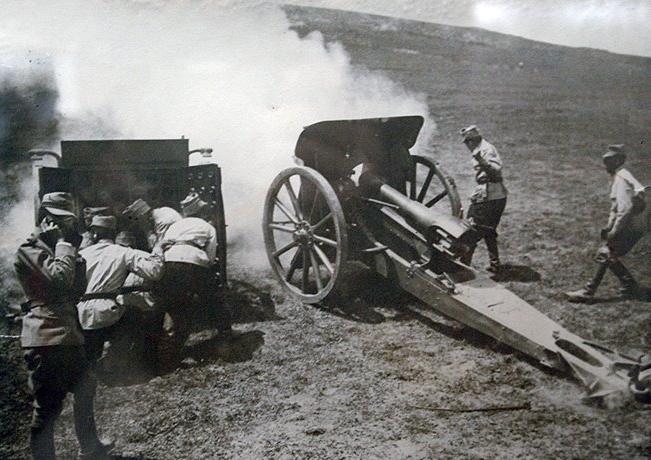
Historical photograph relating to the Battle of Mărăști (1917): Captured Austro-Hungarian artillery in the Casin Valley, 1917, during the Romanian summer offensive at Mărăști
Captured Austro-Hungarian artillery in the Casin Valley, 1917, during the Romanian summer offensive at Mărăști (c. 1917) — Romanian Army Photographic Service (1917). Public domain.
Victor
Romania
Commander: Gen. Grigorescu
Strength: 42,000
Defeated
Austria-Hungary
Commander: Gen. Gerok
Strength: 38,000

The Battle

First Romanian offensive victory of 1917. The French-reformed army proved itself battle-ready.

The Battle of Mărăști (Romanian: Bătălia de la Mărăști) was one of the main battles to take place on Romanian soil in World War I. It was fought between 22 July and 1 August 1917, and was an offensive operation of the Romanian and Russian armies intended to encircle and destroy the German 9th Army. The operation was planned to occur in tandem with the Nămoloasa offensive; however, this operation was abandoned before it began.

“"The Romanian soldier has proven himself equal to the best in Europe." — General Henri Berthelot, head of the French Military Mission to Romania

Casualties & Outcome

1,500
Romania
casualties
3,000
Austria-Hungary
casualties

1,469 killed, 3,052 wounded (Romanian); ~10,000 total including ~2,700 prisoners (Austro-German)

Romania achieved victory over Austria-Hungary.

By 30 July, the 2nd Army had won a 35 km wide and about 20 km deep bridgehead into the 1st Austro-Hungarian Army’s front. The offensive was stopped because the Allied Command had to adjust its initial plans. The new plan moved the 9th Russian Army from the Western Moldavian front to the Northern front to stop the successful offensive of the 3rd and 7th Austro-Hungarian Armies from Bukovina, which started on 19 July. Moreover, the 1st and 2nd Romanian Armies, along with the 4th Russian Army, had to expand their area of responsibility to compensate for the withdrawal of the 9th Russian Army. The Battle of Mărăști represented an important turning point in the evolution of the military operations on the Romanian Front, also raising the morale of Romanian troops.

Historical Record

Archival image of the Battle of Mărăști (1917): General Alexandru Averescu, commander of the Romanian Second Army at the Battle of Mărăști
General Alexandru Averescu, commander of the Romanian Second Army at the Battle of Mărăști (c. 1917) — Romanian Army Photographic Service. Public domain.
Archival image of the Battle of Mărăști (1917): Scenă de luptă , Mărăști - 1917
Scenă de luptă , Mărăști - 1917 — King Ferdinand I National Military Museum. 4.0.
Archival image of the Battle of Mărăști (1917): 1. Soveja : Mausoleul eroilor; 2. Mărăști : Mausoleul eroilor; 3. Focșani : Mausoleul eroilor din 1917; 4. Mărășești : Mausoleul eroilor
1. Soveja : Mausoleul eroilor; 2. Mărăști : Mausoleul eroilor; 3. Focșani : Mausoleul eroilor din 1917; 4. Mărășești : Mausoleul eroilor — National Heritage Institute, Bucharest. 4.0.
Archival image of the Battle of Mărăști (1917): Pinteni din oțel cu curele din piele, parte a echipamentului militar de cavalierie al unui ofițer al Armatei Române la începutul sec. XX. 	Au aparținut generalului Ionescu Mihail și au fost purtați î
Pinteni din oțel cu curele din piele, parte a echipamentului militar de cavalierie al unui ofițer al Armatei Române la începutul sec. XX. Au aparținut generalului Ionescu Mihail și au fost purtați î (c. 1917) — National Museum of Romanian History. 4.0.
Archival image of the Battle of Mărăști (1917): Monument al eroilor căzuți în Primul Război Mondial
Monument al eroilor căzuți în Primul Război Mondial (c. 1928) — National Heritage Institute, Bucharest. 4.0.

Significance & Legacy

Restored morale after the catastrophic 1916 campaign.

The Battle of Mărăști represented an important turning point in the evolution of the military operations on the Romanian Front, also raising the morale of Romanian troops.

Frequently Asked Questions

When was the Battle of Mărăști?
The Battle of Mărăști took place in 1917. Jul 22–Aug 1, 1917.
What was the outcome of the Battle of Mărăști?
The Romania were victorious against the Austria-Hungary.
What was the significance of the Battle of Mărăști?
Restored morale after the catastrophic 1916 campaign.

Related Battles

Battle of Mărășești1917 · Romania victoryBattle of Oituz1917 · Romania victoryTransylvanian Offensive1916 · Austria-Hungary victoryBattle of Turtucaia1916 · Bulgaria & Germany victoryFlămânda Offensive1916 · Bulgaria / Germany victoryBattle of Predeal Pass1916 · Romania (2nd Army) victory
View all World War I battles →

Sources

  • Torrey, G.E. — The Romanian Battlefront in World War I
  • Kiritescu, C. — Istoria Războiului pentru Întregirea României
Wikipedia (English)← Back to Atlas