Mareșal Ion Antonescu * Romanian Third Army – Lieutenant General Petre Dumitrescu ** Mountain Corps – Major General Gheorghe Avramescu *** 1st Mountain Brigade – Brigadier General Mihail Lascăr *** 2nd Mountain Brigade – Brigadier General Ioan Dumitrache *** 4th Mountain Brigade – Brigadier General Gheorghe Manoliu *** 7th Infantry Division – Brigadier General ** Cavalry Corps – Major General Ioan Mihail Racoviță *** 6th Infantry Division – Brigadier General **** 15th Războieni Regiment *** 5th Cavalry Brigade – Colonel **** 6th Motorized Roșiori Regiment – Colonel Radu Korne *** 6th Cavalry Brigade – Major General *** 8th Cavalry Brigade – Colonel ** 4th Army Corps – Major General Constantin Sănătescu *** 13th Infantry Division – Brigadier General *** 14th Infantry Division – Brigadier General *German 11th Army – Colonel General Eugen Ritter von Schobert **XI Army Corps – General of the Infantry Joachim von Kortzfleisch ***22nd Infantry Division – Lieutenant General Hans Graf von Sponeck ***46th Infantry Division – Lieutenant General Karl Kriebel ***239th Infantry Division – Lieutenant General Ferdinand Neuling **XXX Army Corps – General of the Infantry Hans von Salmuth ***76th Infantry Division – Lieutenant General Carl Rodenburg ***198th Infantry Division – Lieutenant General Otto Röttig **LIV...
Campaign: Operation Barbarossa — Southern Sector
Forces Engaged
Romanian cavalryman escorting Soviet prisoners during Operation München, Bessarabia, 1941 (c. 1941) — CaptainFugu. CC BY-SA 3.0.
Victor
Romania / Germany
Commander: Ion Antonescu
Strength:325,000
Defeated
Soviet Union
Commander: Ivan Tyulenev
Strength:364,700
The Battle
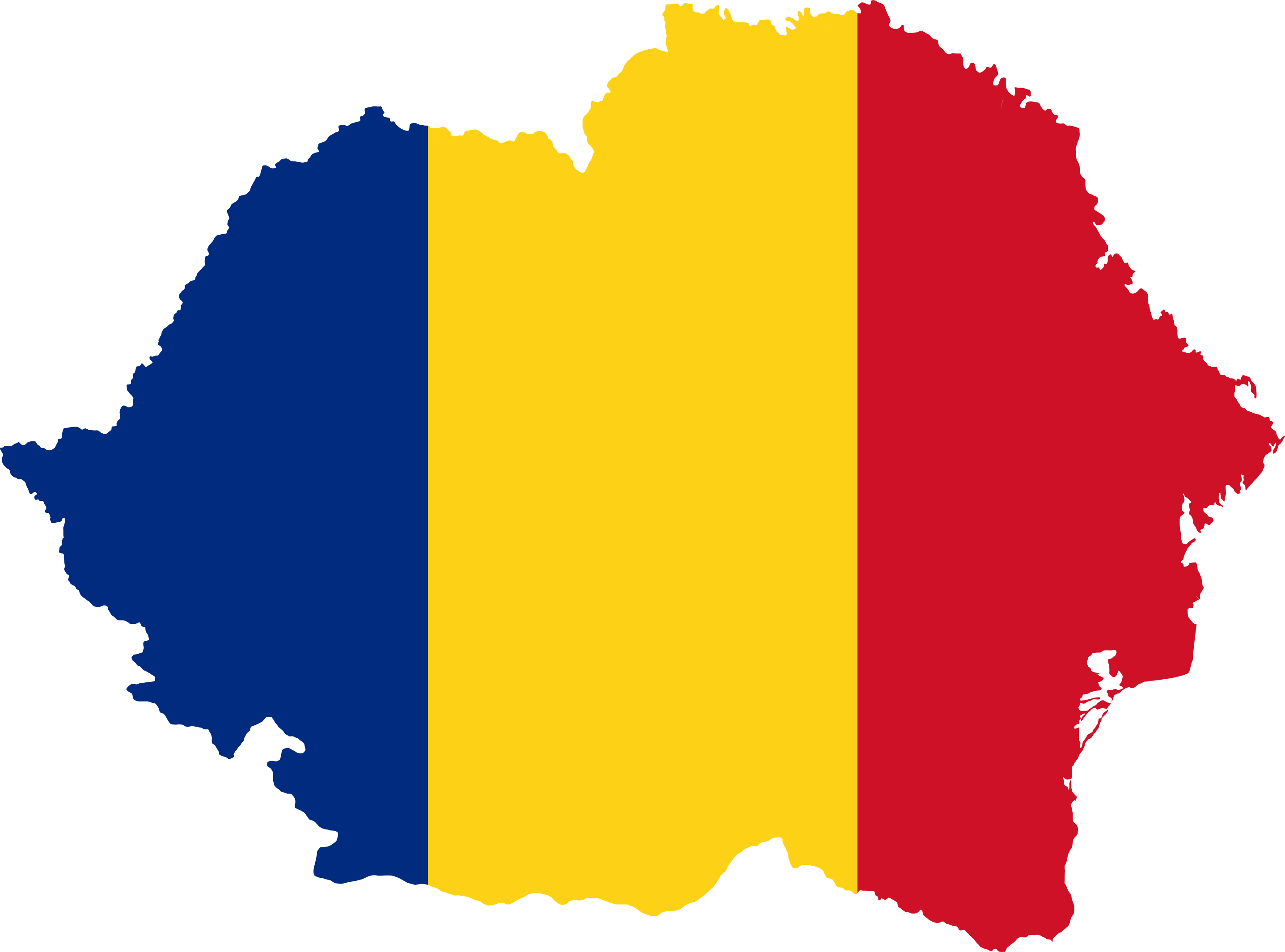
Flag map of Greater Romania (c. 2011) — Romania_1930_counties.500px.svg: Andrein Flag_of_Romania.svg: AdiJapan derivative work: Fry1989 eh? . CC BY-SA 3.0.
Romanian 3rd and 4th Armies crossed the Prut River, driving east to the Dniester. The Romanian Air Force flew 5,100 missions.
Operation München was the Romanian codename of a joint German-Romanian offensive during the German invasion of the Soviet Union in World War II, with the primary objective of recapturing Bessarabia, Northern Bukovina and the Hertsa region, ceded by Romania to the Soviet Union a year before. The operation started during the night of 2–3 July 1941 and concluded successfully after 24 days of fighting. Axis formations involved included the Romanian Third Army in the north; the German Eleventh Army and subordinated Romanian units in the center; and the Romanian Fourth Army in the south. The invasion was followed by a genocide against the Jewish population of Bessarabia.
“"Soldiers, I order you: Cross the Prut! Crush the enemy to the east and north. Free our brothers from the Bolshevik yoke." — Ion Antonescu, Proclamation to the Army, 22 June 1941
Casualties & Outcome
22,765
Romania / Germany
casualties
17,893
Soviet Union
casualties
4,271 killed, 12,326 wounded, 6,168 missing (Romanian); ~17,893 total (Soviet)
Romania / Germany achieved victory over Soviet Union.
Bessarabia and Northern Bukovina recovered. Antonescu declared a "Holy War" and continued east beyond the Dniester — a fateful decision.
Historical Record
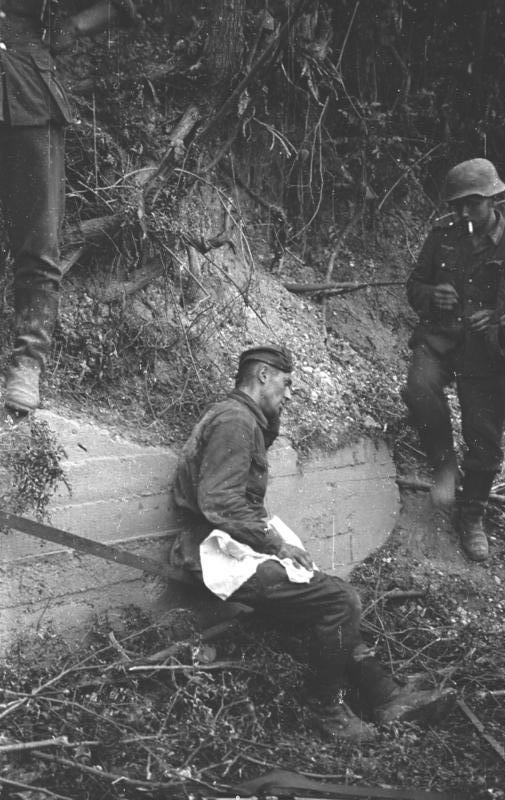
Southern front (Soviet Union) - 22.06 - 10.07.1941 (c. 2009) — Unknown authorUnknown author. Public domain.Heinkel he 114 san diego air and space museum 2 — related to Operation München — Recapture of Bessarabia (1941) (c. 2012) — Unknown authorUnknown author. Public domain.Военно-морской флаг СССР 1935–1950 гг. (c. 2008) — User:Permjak. Public domain.This is a retouched picture, which means that it has been digitally altered from its original version. Modifications: recolored. The original can be viewed here: Bundesarchiv B 145 Bild-F016210-0004, (c. 2016) — Ruffneck'88. CC BY-SA 4.0.For documentary purposes the German Federal Archive often retained the original image captions, which may be erroneous, biased, obsolete or politically extreme. Rumänien, Brückenbau über den Pruth 1.7 (c. 1941) — Unknown authorUnknown author. CC BY-SA 3.0 de.For documentary purposes the German Federal Archive often retained the original image captions, which may be erroneous, biased, obsolete or politically extreme. Brückenbau über den Pruth Sturmgeschütz (c. 1941) — Unknown authorUnknown author. CC BY-SA 3.0 de.For documentary purposes the German Federal Archive often retained the original image captions, which may be erroneous, biased, obsolete or politically extreme. Der einzige Entkommene am Panzerwerk na (c. 1941) — Unknown authorUnknown author. CC BY-SA 3.0 de.Flag map of Greater Romania (c. 2011) — Romania_1930_counties.500px.svg: Andrein Flag_of_Romania.svg: AdiJapan derivative work: Fry1989 eh? . CC BY-SA 3.0.Southern front (Soviet Union) - 22.06 - 10.07.1941 (c. 2009) — Unknown authorUnknown author. Public domain.Heinkel he 114 san diego air and space museum 2 — related to Operation München — Recapture of Bessarabia (1941) (c. 2012) — Unknown authorUnknown author. Public domain.Военно-морской флаг СССР 1935–1950 гг. (c. 2008) — User:Permjak. Public domain.This is a retouched picture, which means that it has been digitally altered from its original version. Modifications: recolored. The original can be viewed here: Bundesarchiv B 145 Bild-F016210-0004, (c. 2016) — Ruffneck'88. CC BY-SA 4.0.For documentary purposes the German Federal Archive often retained the original image captions, which may be erroneous, biased, obsolete or politically extreme. Rumänien, Brückenbau über den Pruth 1.7 (c. 1941) — Unknown authorUnknown author. CC BY-SA 3.0 de.For documentary purposes the German Federal Archive often retained the original image captions, which may be erroneous, biased, obsolete or politically extreme. Brückenbau über den Pruth Sturmgeschütz (c. 1941) — Unknown authorUnknown author. CC BY-SA 3.0 de.For documentary purposes the German Federal Archive often retained the original image captions, which may be erroneous, biased, obsolete or politically extreme. Der einzige Entkommene am Panzerwerk na (c. 1941) — Unknown authorUnknown author. CC BY-SA 3.0 de.
Significance & Legacy
Achieved Romania's primary war aim — restoration of the 1940 eastern border — in 24 days.
Frequently Asked Questions
When was the Operation München — Recapture of Bessarabia?
The Operation München — Recapture of Bessarabia took place in 1941. Jul 2–26, 1941.
Who won the Operation München — Recapture of Bessarabia?
The Romania / Germany were victorious against the Soviet Union.
What was the significance of the Operation München — Recapture of Bessarabia?
Achieved Romania's primary war aim — restoration of the 1940 eastern border — in 24 days.