Battle of Stănilești(1711)
Approximate site. The pin marks a locally accepted site or a nearby anchor point, not a survey-grade position.
Stănilești comună pe râul Prut, județul Vaslui
Coordinate source: Maptons.com + Wikipedia Pruth River Campaign
Background
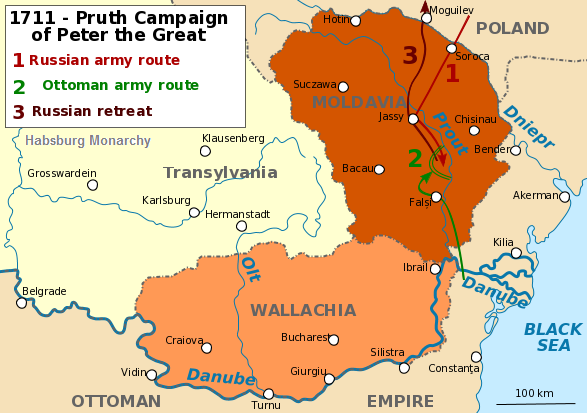
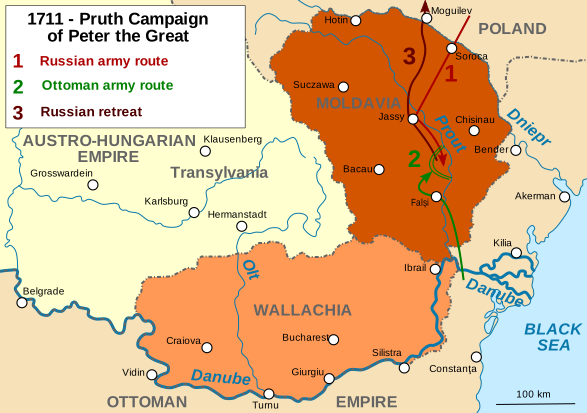
Peter the Great entered Moldova hoping that the Orthodox population and Cantemir would provide supplies and recruits to attack the Ottoman Empire from the north. The campaign quickly turned into a strategic trap.
Campaign: Prut Campaign 1711
Forces Engaged
The Battle
Peter the Great led 38,000 Russians into Moldova, hoping to trigger a Christian uprising, but was encircled by a vast Ottoman-Tatar army on the Prut river near Stănilești. Forced to negotiate, Peter signed the Treaty of the Prut, ceding Azov and agreeing to withdraw.
The Russo-Ottoman War of 1710–1713, also known as the Pruth River Campaign, was a brief military conflict between the Tsardom of Russia and the Ottoman Empire. The main battle took place during 18–22 July 1711 in the basin of the Pruth river near Stănilești after Tsar Peter I entered the Ottoman vassal Principality of Moldova, following the Ottoman Empire's declaration of war on Russia. The ill-prepared Russians, Cossacks, and Moldavians found themselves surrounded by the Ottoman Army under Grand Vizier Baltacı Mehmet Pasha. After three days of fighting and heavy casualties the Tsar and his army were allowed to withdraw after agreeing to abandon the fortress of Azov and its surrounding territory. The Ottoman victory led to the Treaty of the Pruth which was confirmed by the Treaty of Adrianople.
“Peter and Cantemir concentrated their troops on the right bank of the Prut, across the river from the Ottomans.
Casualties & Outcome
Approximately 5,000 Russian casualties, 8,000 Ottoman-Tatar casualties
Ottoman Empire / Crimean Khanate achieved victory over Russia / Moldova.
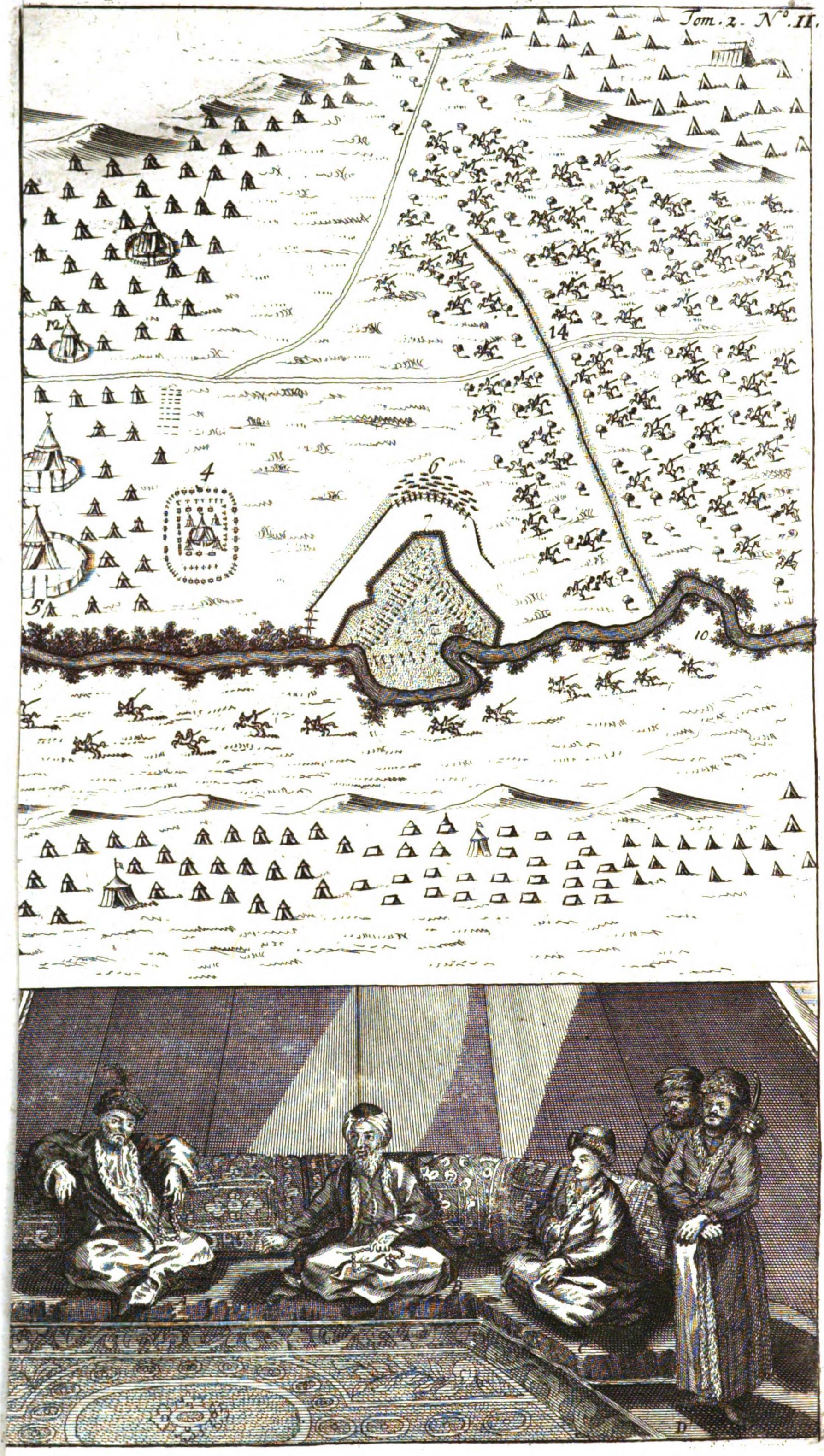
Bataille du Prout. Illustration from William Hogarth (1697–1764) for the Travels by Aubry de la Motraye, 1724 Alexander Mikaberidze argues that Baltacı Mehmet Pasha made an important strategic mistake by signing the treaty with relatively easy terms for the Russians. Since Peter himself was commanding the Russian army, and had Baltacı Mehmet Pasha not accepted Peter's peace proposal and pursued to capture him as a prisoner instead, the course of history could have changed. Without Peter, Russia would have hardly become an imperial power, and the future arch-enemy of the Ottoman State in the Balkans, the Black Sea basin and the Caucasus. Although the news of the victory was first received well in Constantinople, the dissatisfied pro-war party turned general opinion against Baltacı Mehmet Pasha, who was accused of accepting a bribe from Peter the Great. Baltacı Mehmet Pasha was then relieved from his office.
Historical Record



Significance & Legacy
It ended the first major Russian campaign in the Danubian Principalities; Cantemir fled to Russia; Moldova lost its pro-Russian ruler.
The Ottoman victory led to the Treaty of the Pruth which was confirmed by the Treaty of Adrianople. He and his retinue fled to the Ottoman fortress of Bender, in the Ottoman vassal principality of Moldova.
Frequently Asked Questions
- When was the Battle of Stănilești?
- The Battle of Stănilești took place in 1711. 18–22 Jul 1711.
- What was the outcome of the Battle of Stănilești?
- The Ottoman Empire / Crimean Khanate were victorious against the Russia / Moldova.
- What was the significance of the Battle of Stănilești?
- It ended the first major Russian campaign in the Danubian Principalities; Cantemir fled to Russia; Moldova lost its pro-Russian ruler.