Battle of Larga(1770)
Exact site. The pin marks a documented battlefield location rather than a broad area.
Câmpul de luptă pe râul Larga, afluent al Prutului, Moldova
Coordinate source: Royal Collection Trust RCIN 733077: 46°06'16"N 28°07'25"E
Background
Rumyantsev was ordered to attack the Ottoman Empire directly through Moldova. At Larga, he tested the new divisional square tactics against numerically superior Tatar cavalry.
Campaign: Russo-Turkish War 1768–1774
Forces Engaged
The Battle
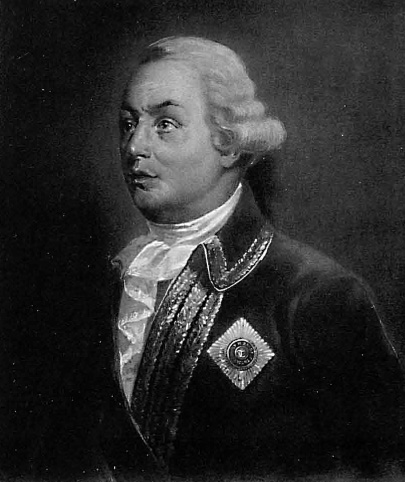
Rumyantsev's Russian army repelled the combined Ottoman-Tatar forces at the Larga river in Moldova through a brilliant attack in divisional squares. Russian losses were minimal; Ottoman losses were heavy. The new divisional square tactics proved decisive.
The Battle of (the) Larga was fought between 65,000 Crimean Tatars and 15,000 Ottomans under Qaplan II Giray against 38,000 Russians under Field-Marshal Rumyantsev on the banks of the Larga River, a tributary of the Prut River, in Moldova (now in Moldova), for eight hours on 7 July 1770. It was fought on the same day as Battle of Chesma, a key naval engagement of the Russo-Turkish War, 1768–1774. The battle was a decisive victory for the Russians who captured 33 Turkish cannons and the vast enemy camp.
Casualties & Outcome
Approximately 90 Russian casualties; approximately 1,000 Ottoman-Tatar casualties
Russia achieved victory over Ottoman Empire / Crimean Khanate.
Ottoman-Tatar forces retreated southward; Rumyantsev consolidated his position in southern Moldova; it opened the path to the decisive victory at Cahul a month later.
Historical Record
Significance & Legacy
The first of Rumyantsev's two great tactical victories of 1770; it demonstrated the new Russian infantry tactics that would dominate the Danubian campaigns for decades; it forced the Ottoman-Tatar withdrawal southward.
Frequently Asked Questions
- When was the Battle of Larga?
- The Battle of Larga took place in 1770. 7 Jul 1770.
- What was the outcome of the Battle of Larga?
- The Russia were victorious against the Ottoman Empire / Crimean Khanate.
- What was the significance of the Battle of Larga?
- The first of Rumyantsev's two great tactical victories of 1770; it demonstrated the new Russian infantry tactics that would dominate the Danubian campaigns for decades; it forced the Ottoman-Tatar withdrawal southward.