HomeAll BattlesHistorical Periods
  1. Home
  2. ›
  3. Revolution of 1848
  4. ›
  5. Battle of Piski (Simeria)

Battle of Piski (Simeria)(1849)

Explore on Interactive Map
February 9, 1849·Hungarian Revolutionary Army victory·river crossing·river crossing, bridge over Strei River

Background

Piski was a do-or-die moment for the Hungarian campaign in Transylvania. Five days after near-destruction at Vízakna, Bem had somehow assembled 7,000 men and chose to stand at the Strei River bridge. Victory here saved the entire Transylvanian theater.

Campaign: Bem's Transylvanian Campaign 1849

Forces Engaged
Colonel Baron Kemény defending the bridge at Pishki (1852)
Colonel Baron Kemény defending the bridge at Pishki (1852) (c. 1852) — Hahn, Wilhelm (artist) Day & Son (lithographer). Public domain.
Victor
Hungarian Revolutionary Army
Commander: General Józef Bem
Strength: 7,000
Defeated
Austrian Imperial Forces
Commander: General Kalliány
Strength: 5,500

The Battle

The Battle of Piski, February 9, 1849, painting by Theodor Breitwieser showing Bem's forces defending the bridge
The Battle of Piski, February 9, 1849, painting by Theodor Breitwieser showing Bem's forces defending the bridge (c. 1849) — Theodor Breitwieser (1847–1930). Public domain.

Bloodiest engagement of Bem's campaign. Bridge over Strei River changed hands repeatedly in fierce close combat.

The Battle of Piski was a battle in the Hungarian war of Independence of 1848-1849 fought on 9 February 1849 between the Hungarian army led by the Polish General Józef Bem and the Austrian army of the Habsburg Commander-in-Chief of Transylvania, Lieutenant General Anton Puchner. As a result of the defeats suffered by Bem against the much superior Austrian army, supported also by Romanian and Saxon militias, and a Russian army of several thousand soldiers, the Hungarian army was about to be pushed out of Transylvania. This is why this battle was a crucial one for Bem. And thanks to the reinforcements sent from Hungary, he could stop the Austrian attack at Piski, defeat Puchner, and restart the fight for the province.

Casualties & Outcome

500
Hungarian Revolutionary Army
casualties
400
Austrian Imperial Forces
casualties

~500 killed and wounded (Hungarian); ~400 killed and wounded (Austrian)

Hungarian Revolutionary Army achieved victory over Austrian Imperial Forces.

The Austrian pursuit was broken. Bem resumed the offensive, sweeping through Transylvania toward Sibiu. Piski became the symbolic turning point — proof that the campaign could be won despite catastrophic setbacks.

Historical Record

Battle of Piski 9 February 1849. Situation around 3 p.m.
Battle of Piski 9 February 1849. Situation around 3 p.m. (c. 2023) — Sylvain5791. CC BY-SA 4.0.
Battle of Piski 9 February 1849. Situation around 5 p.m.
Battle of Piski 9 February 1849. Situation around 5 p.m. (c. 2023) — Sylvain5791. CC BY-SA 4.0.
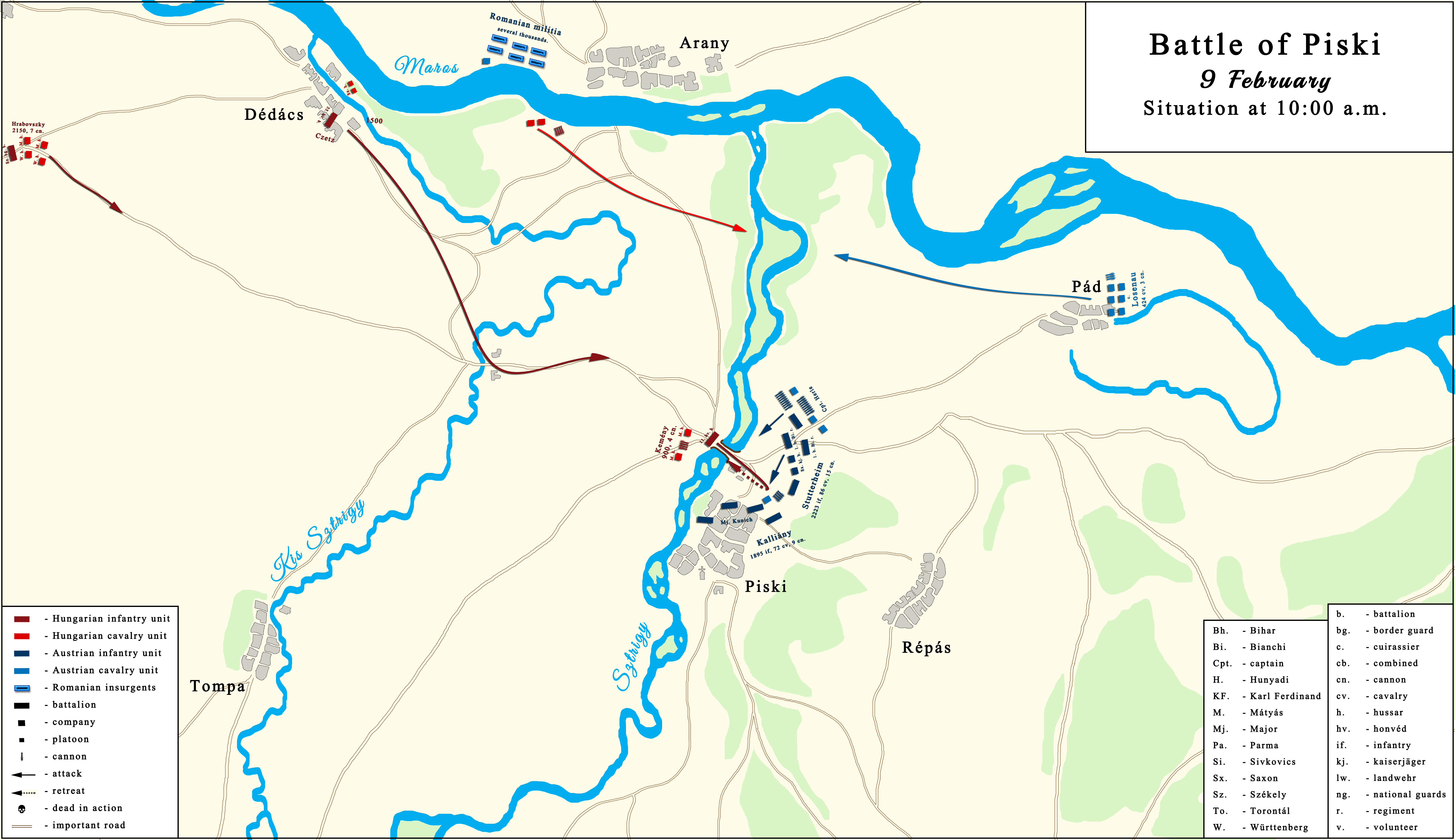
Battle of Piski 9 February 1849. Situation at 10 a.m.
Battle of Piski 9 February 1849. Situation at 10 a.m. (c. 2023) — Sylvain5791. CC BY-SA 4.0.
Battle of Piski 9 February 1849. Situation between 10.30-11.00 a.m.
Battle of Piski 9 February 1849. Situation between 10.30-11.00 a.m. (c. 2023) — Sylvain5791. CC BY-SA 4.0.
the Lonesau memorial in the castle of Alba Iulia (Gyulafehérvár, Karlsburg)
the Lonesau memorial in the castle of Alba Iulia (Gyulafehérvár, Karlsburg) (c. 2008) — Oguszt. CC BY-SA 3.0.
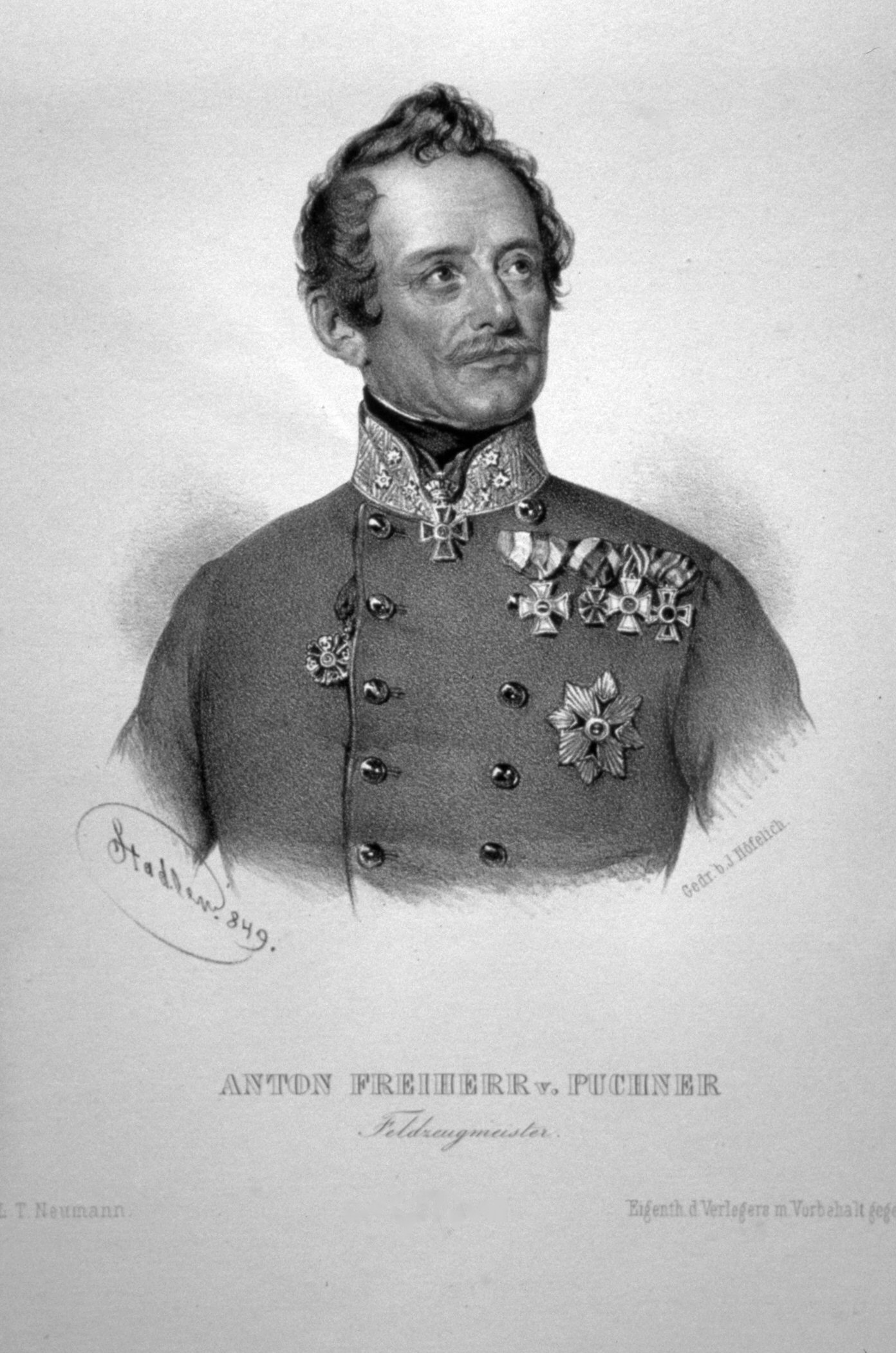
Anton Freiherr von Puchner (1779-1852), k. k. Feldzeugmeister. Ritter des Maria-Theresien Ordens. Lithographie von Johann Stadler, 1849
Anton Freiherr von Puchner (1779-1852), k. k. Feldzeugmeister. Ritter des Maria-Theresien Ordens. Lithographie von Johann Stadler, 1849 (c. 1849) — Johann Stadler (1804-1859). Public domain.
Józef Bem with his bandaged wounds received in the battles of Vízakna and Szászváros (4-6 February 1849)
Józef Bem with his bandaged wounds received in the battles of Vízakna and Szászváros (4-6 February 1849) (c. 1849) — Unknown author. Before August 1849. Public domain.
Colonel Baron Kemény defending the bridge at Pishki (1852)
Colonel Baron Kemény defending the bridge at Pishki (1852) (c. 1852) — Hahn, Wilhelm (artist) Day & Son (lithographer). Public domain.
Battle of Piski 9 February 1849. Situation around 3 p.m.
Battle of Piski 9 February 1849. Situation around 3 p.m. (c. 2023) — Sylvain5791. CC BY-SA 4.0.
Battle of Piski 9 February 1849. Situation around 5 p.m.
Battle of Piski 9 February 1849. Situation around 5 p.m. (c. 2023) — Sylvain5791. CC BY-SA 4.0.
Battle of Piski 9 February 1849. Situation at 10 a.m.
Battle of Piski 9 February 1849. Situation at 10 a.m. (c. 2023) — Sylvain5791. CC BY-SA 4.0.
Battle of Piski 9 February 1849. Situation between 10.30-11.00 a.m.
Battle of Piski 9 February 1849. Situation between 10.30-11.00 a.m. (c. 2023) — Sylvain5791. CC BY-SA 4.0.
the Lonesau memorial in the castle of Alba Iulia (Gyulafehérvár, Karlsburg)
the Lonesau memorial in the castle of Alba Iulia (Gyulafehérvár, Karlsburg) (c. 2008) — Oguszt. CC BY-SA 3.0.
Anton Freiherr von Puchner (1779-1852), k. k. Feldzeugmeister. Ritter des Maria-Theresien Ordens. Lithographie von Johann Stadler, 1849
Anton Freiherr von Puchner (1779-1852), k. k. Feldzeugmeister. Ritter des Maria-Theresien Ordens. Lithographie von Johann Stadler, 1849 (c. 1849) — Johann Stadler (1804-1859). Public domain.
Józef Bem with his bandaged wounds received in the battles of Vízakna and Szászváros (4-6 February 1849)
Józef Bem with his bandaged wounds received in the battles of Vízakna and Szászváros (4-6 February 1849) (c. 1849) — Unknown author. Before August 1849. Public domain.

Significance & Legacy

Decisive Hungarian victory that reversed Vízakna and allowed Bem to resume his offensive toward Sibiu.

Frequently Asked Questions

When was the Battle of Piski (Simeria)?
The Battle of Piski (Simeria) took place in 1849. February 9, 1849.
Who won the Battle of Piski (Simeria)?
The Hungarian Revolutionary Army were victorious against the Austrian Imperial Forces.
What was the significance of the Battle of Piski (Simeria)?
Decisive Hungarian victory that reversed Vízakna and allowed Bem to resume his offensive toward Sibiu.

Related Battles

Battle of Szőkefalva (Seuca)1849 · Hungarian Revolutionary Army victoryFirst Battle of Nagyszeben (Sibiu)1849 · Austrian-Russian garrison victoryBattle of Szelindek (Slimnic)1849 · Hungarian Revolutionary Army victoryGreat Assembly of Blaj1848 · Romanian Transylvanians victoryProclamation of Islaz1848 · Revolutionaries victorySkirmish at Beilic Bridge1848 · Ottoman Imperial Army victory
View all Revolution of 1848 battles →

Sources

  • Hermann, R. — Az 1848-1849-es szabadságharc hadtörténete
  • Bona, G. — Tábornokok és törzstisztek
Wikipedia (English)Wikidata← Back to Atlas