Battle of Cahul(1770)
Exact site. The pin marks a documented battlefield location rather than a broad area.
Câmpul de luptă Kagul/Cahul
Coordinate source: Royal Collection Trust RCIN 733078: 45°54'27"N 28°11'40"E
Background
The battle was the decisive land engagement of the Russo-Turkish War of 1768–1774, fought after Russian Field-Marshal Rumyantsev's forces had captured the fortress of Bender. It was an escalation of the conflict as both empires committed their main armies to a confrontation in the Danube basin.
Campaign: Russo-Turkish War 1768–1774
Forces Engaged
The Battle
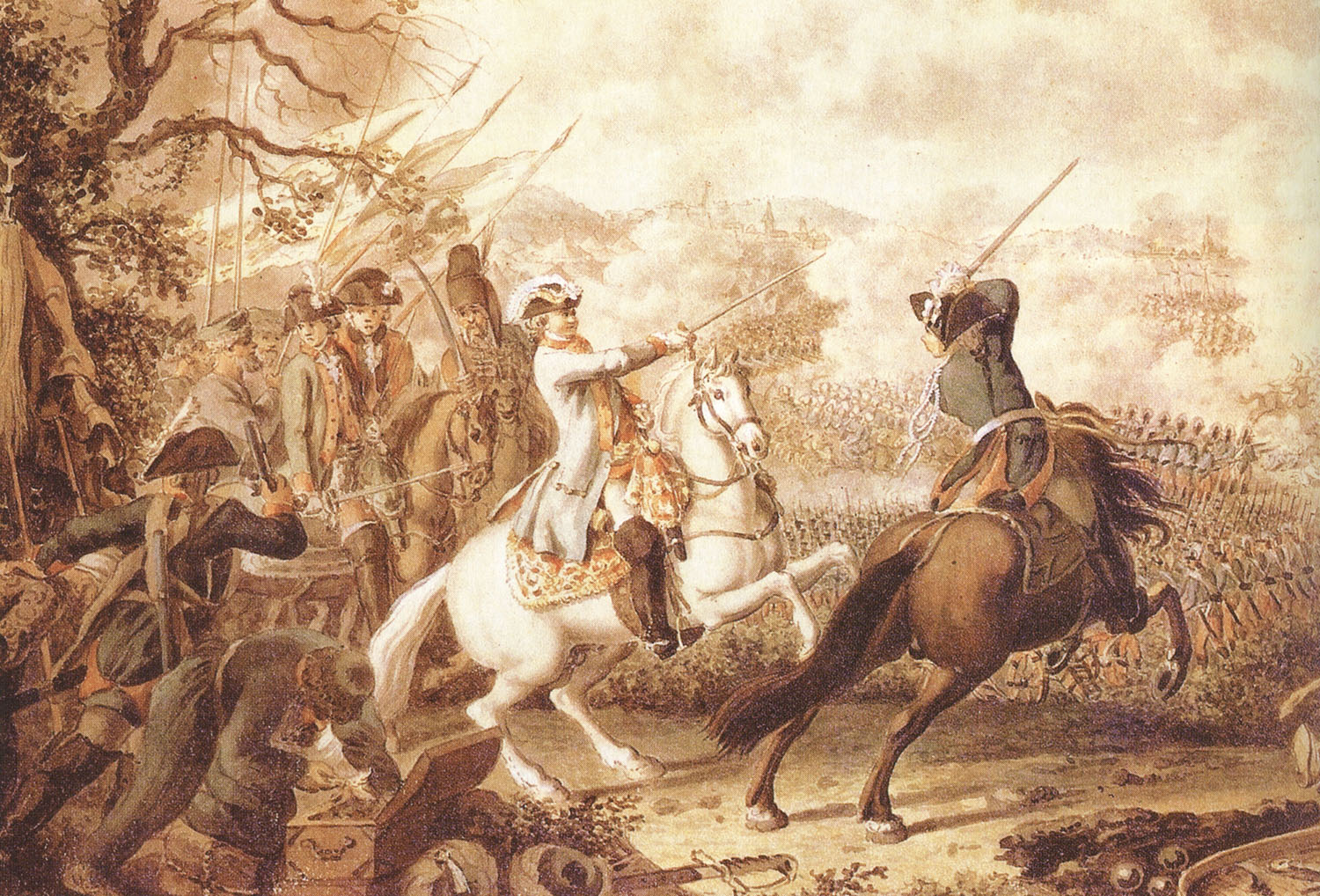
Rumyantsev with only 17,000 men attacked and routed a grand Ottoman army of 150,000 on the Cahul river in southern Moldova. One of the most lopsided victories of the war, it opened the road to the Danube.
The Battle of Kagul or Cahul occurred on 1 August 1770 during the Russo-Turkish War of 1768–1774. It was the decisive and most important land battle of the war and one of the largest battles of the 18th century. It was fought in Moldova, near the village of Frumoasa, nearly a month after the Russian victory at Larga.
“Ivazzade Pasha witnessed the marching of this force, and after doing a reconnaissance on the Russian positions, decided that he would launch his attack the next day at precisely 10 a.m., two hours before noon. The said cannons fired grapeshots to the Ottoman cavalry, inflicting seriously crippling losses to the attackers and were thus driven back with only relatively few remaining to report to their commanders, and thus the Russians continued their fighting march.
Casualties & Outcome
Approximately 1,000 Russian casualties; over 20,000 Ottoman casualties (dead, wounded, captured)
Russia achieved victory over Ottoman Empire.
In the wake of the victory at Kagul, with the Ottoman military presence in the Danube Delta region rendered null, the Russians overran all major fortresses in the region — Izmail, Kilia, Ackerman, İbrail (now Brăila), İsakça (now Isaccea), and Bender, all taken with minor difficulties. In commemoration of the victory, the empress Catherine II ordered the Cahul Obelisk to be erected in Tsarskoe Selo, while Frederick II of Prussia sent to Rumyantsev a congratulatory letter in which he compared the Russian victory to the deeds of the Ancient Romans. Meanwhile, the Ottoman sultan Mustafa III removed Ivazzade Halil Pasha from his post as the Grand Vizier as a result of this defeat and was replaced by Silahdar Mehmed Pasha. On the same day four years later, the Russian and Ottoman empires signed the Treaty of Küçük Kaynarca, ending the war.
Historical Record


Significance & Legacy
Decisive battle of the 1768–1774 War; it led directly to the Russian capture of Ismail, Akkerman, Kilia, and Brăila; it effectively ended Ottoman resistance north of the Danube; Rumyantsev received the title "Zadunaysky" (Beyond the Danube).
It was the decisive and most important land battle of the war and one of the largest battles of the 18th century.
Frequently Asked Questions
- When was the Battle of Cahul?
- The Battle of Cahul took place in 1770. 1 Aug 1770.
- What was the outcome of the Battle of Cahul?
- The Russia were victorious against the Ottoman Empire.
- What was the significance of the Battle of Cahul?
- Decisive battle of the 1768–1774 War; it led directly to the Russian capture of Ismail, Akkerman, Kilia, and Brăila; it effectively ended Ottoman resistance north of the Danube; Rumyantsev received the title "Zadunaysky" (Beyond the Danube).