Battle of Debrecen(1944)
Exact site. The pin marks a documented battlefield location rather than a broad area.
Debrecen, Hungary
Coordinate source: Standard GPS Debrecen
Background
On 23 August 1944, Romania, a former ally of Germany, declared war on Germany and its ally Hungary. The subsequent appearance of the Third Ukrainian Front under Soviet general Fyodor Tolbukhin in Romania destroyed any semblance of organized defensive lines. On 8 September, Bulgaria, another former German ally, declared war on Germany. At this point, Tolbukhin, assisted by the Second Ukrainian Front under Rodion Malinovsky, destroyed thirteen Axis divisions, taking over 100,000 prisoners. Both Rodion Malinovsky and Tolbukhin were promoted to the rank of Marshal of the Soviet Union for this achievement on 10 and 12 September respectively. These developments created a 650-kilometer gap in the army group of Friessner. On 24 September 1944, Friessner's Southern Ukraine Army Group was renamed the Southern Army Group. General Fretter-Pico's 6th Army formed the core of Friessner's force, alongside the 2nd Hungarian Army. The German-Hungarian force was named the Fretter-Pico Army Group.
Campaign: Romanian Advance West 1944-45
Forces Engaged
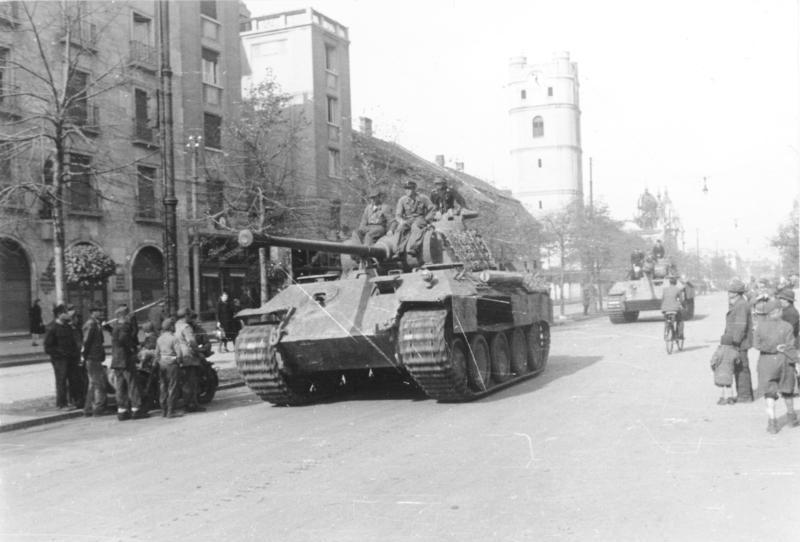
The Battle
Romanian and Soviet forces advanced into the Hungarian Plain, fighting beyond Romania's borders.
The Battle of Debrecen, known by the Red Army as the Debrecen Offensive Operation, was a battle that took place between October 6 and October 29, 1944, on the Eastern Front during World War II. The Battle of Carei occurred during this battle. The offensive was led by the 2nd Ukrainian Front, commanded by Marshal Rodion Malinovski. It faced the German 6th Army under General Maximilian Fretter-Pico and the Hungarian 2nd and 3rd Armies from the Southern Ukrainian Army Group. The 2nd Ukrainian Front was supported by Soviet mechanized cavalry groups, the 1st and 4th Romanian Armies. Axis units were forced to retreat approximately 160 kilometers while opposing the 2nd Ukrainian Front, which had the strategic objective of capturing the city of Debrecen in Hungary.
Casualties & Outcome
~10,000 killed, ~5,000 wounded (Romanian/Soviet); ~15,000 killed, ~5,000 captured (German/Hungarian)
Romania & USSR achieved victory over Germany & Hungary.
Three army groups of the Second Ukrainian Front under Malinovski suffered significant losses during the fighting, and the Second Ukrainian Front's intentional attack on Budapest was delayed. The counterattack at Nyíregyháza marked the last time German forces managed to defeat a fully equipped Red Army unit under equal conditions. The Germans succeeded in reestablishing a stable position along the front line, thereby preventing the advance of the Second Ukrainian Front from becoming a catastrophe for Wöhler. However, the German success was short-lived, as Nyíregyháza was recaptured by the Red Army on October 30, and another strong Red Army offensive was launched toward the south, with Budapest once again becoming its objective. Soviet forces reached the area of Hungary's capital on November 7, 1944.
Historical Record


Significance & Legacy
Romania's war continued far beyond its own territory.
Frequently Asked Questions
- When was the Battle of Debrecen?
- The Battle of Debrecen took place in 1944. Oct 6–29, 1944.
- What was the outcome of the Battle of Debrecen?
- The Romania & USSR were victorious against the Germany & Hungary.
- What was the significance of the Battle of Debrecen?
- Romania's war continued far beyond its own territory.