HomeAll BattlesHistorical Periods
  1. Home
  2. ›
  3. Early Modern Era
  4. ›
  5. Battle of Guruslău

Battle of Guruslău(1601)

Explore on Interactive Map
Aug 3, 1601·Habsburg Empire & Wallachia victory·land·hills near Zalău, NW Transylvania

Background

Sigismund Báthory returned to Transylvania with Ottoman backing in a final attempt to reclaim the principality. Michael the Brave allied with Habsburg general Basta under Imperial orders to suppress the revolt.

Campaign: Habsburg Reconquest of Transylvania 1601

Forces Engaged
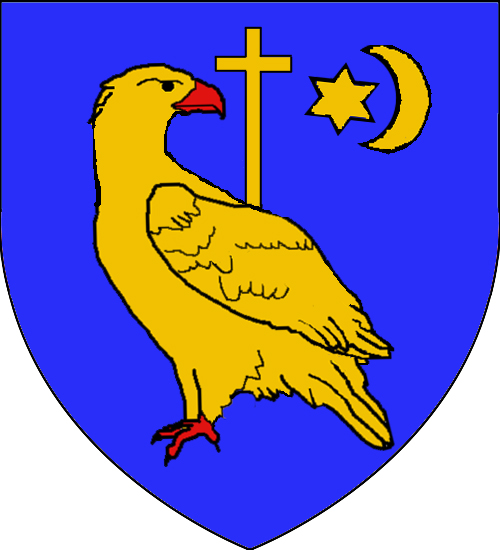
Coat of arms of Wallachia
Coat of arms of Wallachia (c. 2010) — Seneslav. CC BY 3.0.
Victor
Habsburg Empire & Wallachia
Commander: Michael the Brave, Giorgio Basta
Strength: 20,000
Defeated
Transylvanian Nobility (Báthory)
Commander: Sigismund Báthory
Strength: 40,000

The Battle

Allegory of the Turkish War — The Battle of Goroszló, by court painter Hans von Aachen (c. 1603–04)
Allegory of the Turkish War — The Battle of Goroszló, by court painter Hans von Aachen (c. 1603–04) (c. 1604) — Hans von Aachen (1552–1615). Public domain.

Michael and Basta temporarily reconciled under Imperial orders to crush Sigismund Báthory's return under Ottoman protection. All 45 Transylvanian cannons were captured. Days later, on August 9, 1601, Basta ordered Michael the Brave's assassination.

The Battle of Guruslău or Battle of Goroszló was fought on 3 August 1601, between the troops of the Habsburg monarchy led by Giorgio Basta, the Zaporozhian Cossacks and Wallachia led by Michael the Brave on one side, and the Transylvanian troops led by Sigismund Báthory on the other side. It was part of a series of military encounters between the Ottoman Empire and opposing European states during 1591–1606.

Casualties & Outcome

?
Habsburg Empire & Wallachia
casualties
10,000
Transylvanian Nobility (Báthory)
casualties

Unknown | 10,000 casualties All cannons captured

Habsburg Empire & Wallachia achieved victory over Transylvanian Nobility (Báthory).

Michael the Brave was assassinated by Habsburg mercenaries on Basta's orders six days after the battle, ending his career and the brief era of unified Romanian principalities.

Historical Record

Michael the Brave at Guruslău, 1601 — engraving from Khevenhüller's Annales Ferdinandi (1772)
Michael the Brave at Guruslău, 1601 — engraving from Khevenhüller's Annales Ferdinandi (1772) (c. 1772) — Khevenhüller (1772). Public domain.
Battle of Guruslău — engraving by Georg Keller (early 17th century)
Battle of Guruslău — engraving by Georg Keller (early 17th century) (c. 1605) — Georg Keller. Public domain.
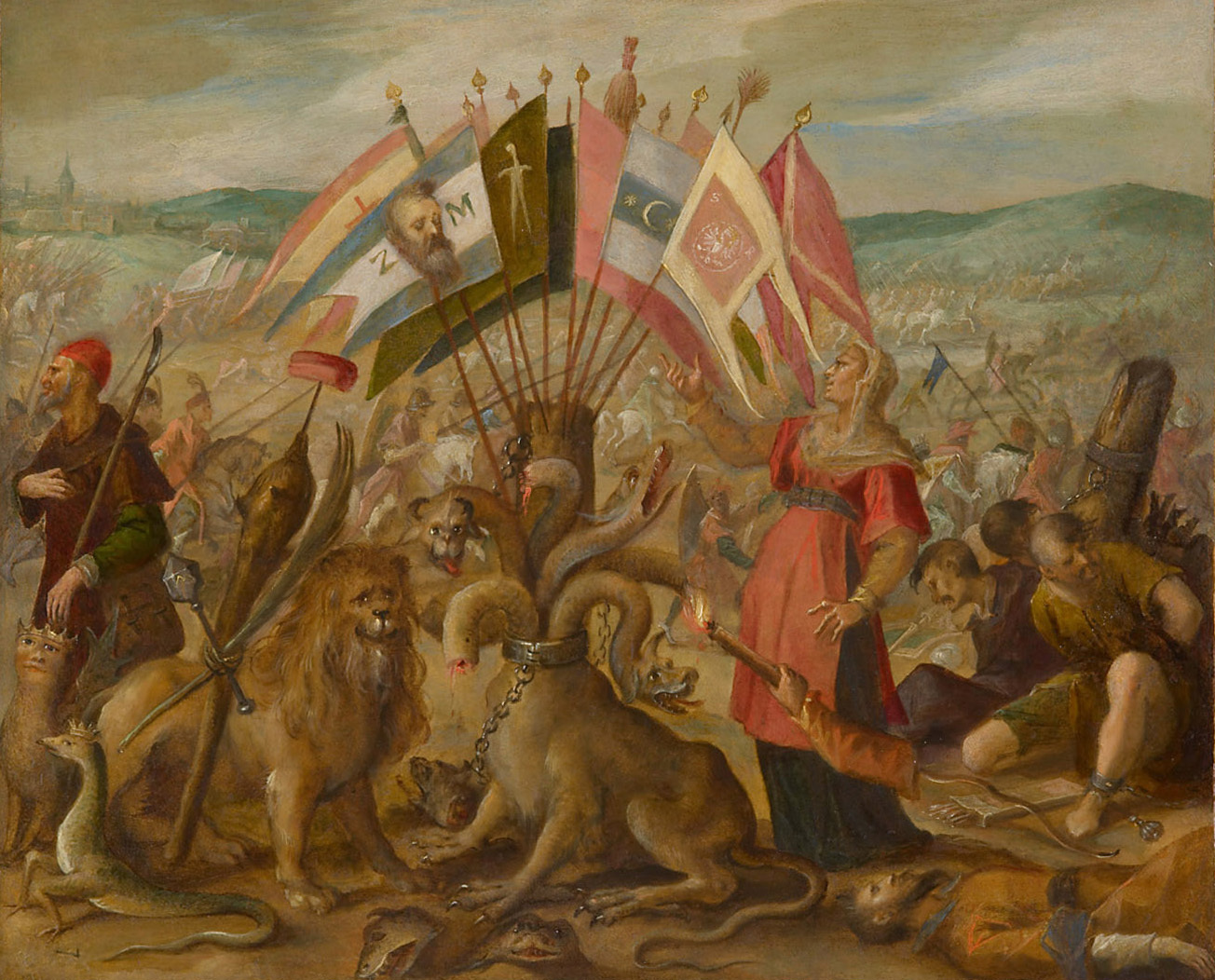
Allegory of the Turkish war: Battle of Braşov (Romania), 17 July 1603. Battle between Radu Şerban of Wallachia and Mózes Székely. Different Turkish, Polish and Transylvanian flags, captured in 1601 by
Allegory of the Turkish war: Battle of Braşov (Romania), 17 July 1603. Battle between Radu Şerban of Wallachia and Mózes Székely. Different Turkish, Polish and Transylvanian flags, captured in 1601 by (c. 1603) — Hans von Aachen. Public domain.
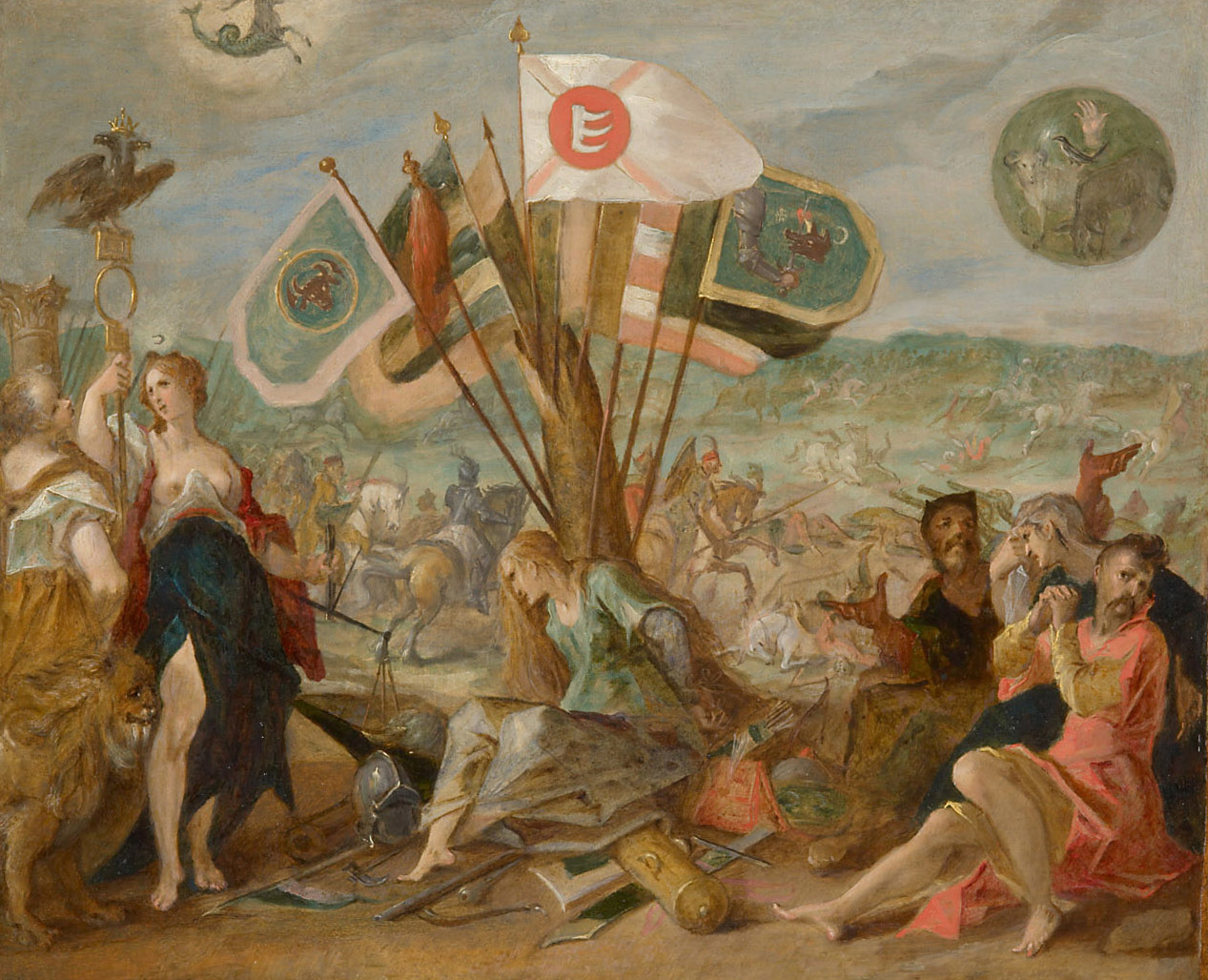
Allegory of the Turkish war: Battle of Hermannstadt (Transylvania), 3 August 1601. Actually, the battle was held at Goroszló (Transylvania), near Zilah city. Center: Discordia, helding some of the 110
Allegory of the Turkish war: Battle of Hermannstadt (Transylvania), 3 August 1601. Actually, the battle was held at Goroszló (Transylvania), near Zilah city. Center: Discordia, helding some of the 110 (c. 1603) — Hans von Aachen. Public domain.
Michael the Brave defeating the Hungarians in Guraslau, 1601.
Michael the Brave defeating the Hungarians in Guraslau, 1601. — Alex:D. Public domain.
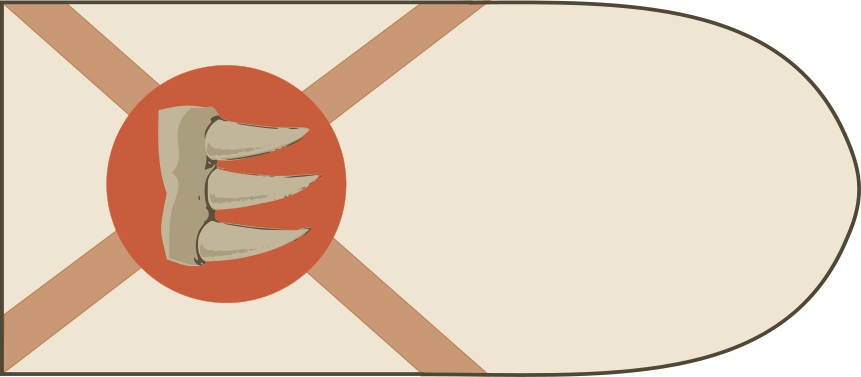
Flag of Transylvania in 1601, featuring the Báthory arms. Based on design captured at the Battle of Guruslău, as presented in von Aachen's allegory of the event. One of the several variants used in th
Flag of Transylvania in 1601, featuring the Báthory arms. Based on design captured at the Battle of Guruslău, as presented in von Aachen's allegory of the event. One of the several variants used in th (c. 2017) — Dahn. CC BY 4.0.
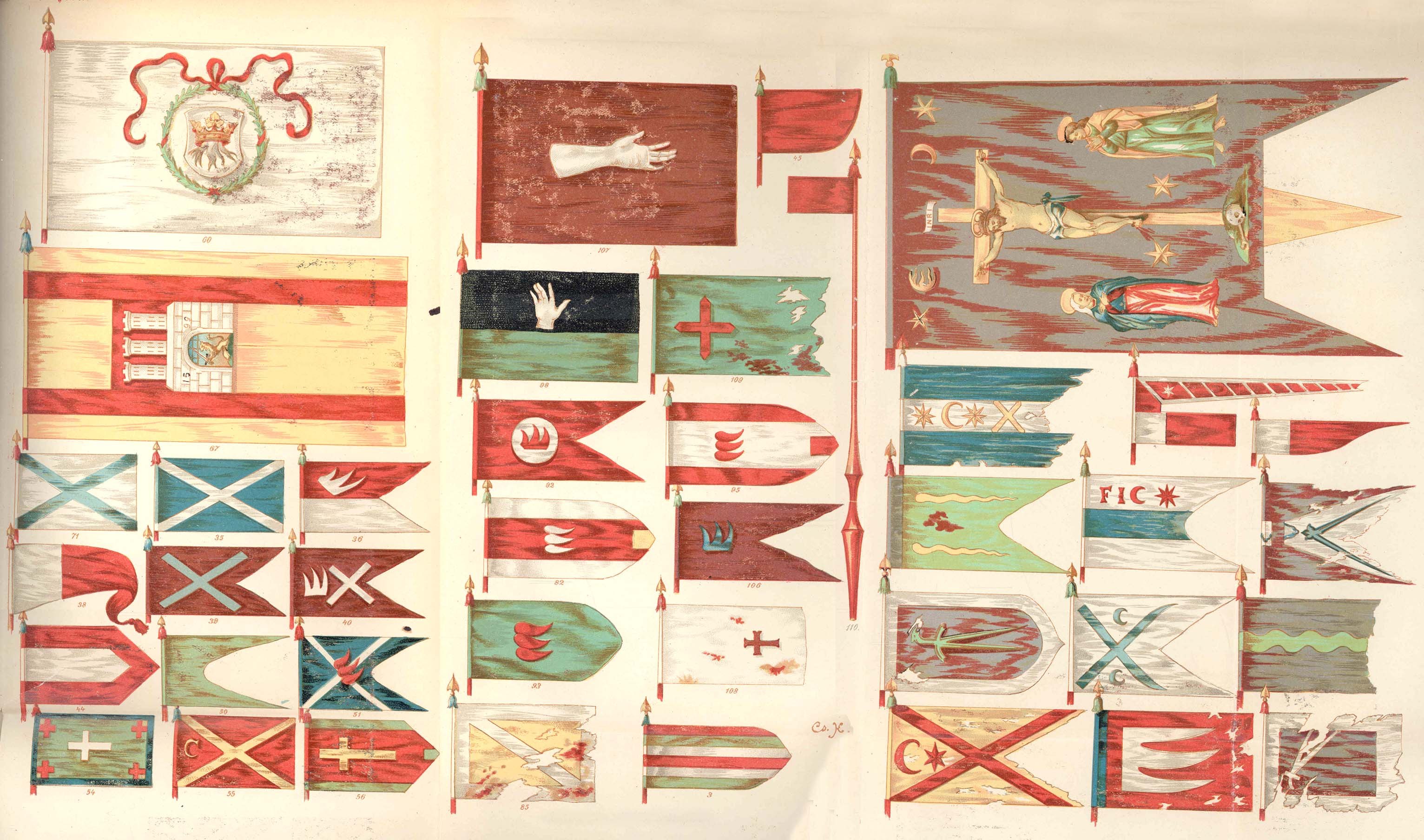
Transylvanian and Turkish flags.
Transylvanian and Turkish flags. (c. 1898) — Károly Cserna. Public domain.
Transylvanian and Turkish flags.
Transylvanian and Turkish flags. (c. 1898) — Károly Cserna. Public domain.
Allegory of the Turkish war: Battle of Braşov (Romania), 17 July 1603. Battle between Radu Şerban of Wallachia and Mózes Székely. Different Turkish, Polish and Transylvanian flags, captured in 1601 by
Allegory of the Turkish war: Battle of Braşov (Romania), 17 July 1603. Battle between Radu Şerban of Wallachia and Mózes Székely. Different Turkish, Polish and Transylvanian flags, captured in 1601 by (c. 1603) — Hans von Aachen. Public domain.
Allegory of the Turkish war: Battle of Hermannstadt (Transylvania), 3 August 1601. Actually, the battle was held at Goroszló (Transylvania), near Zilah city. Center: Discordia, helding some of the 110
Allegory of the Turkish war: Battle of Hermannstadt (Transylvania), 3 August 1601. Actually, the battle was held at Goroszló (Transylvania), near Zilah city. Center: Discordia, helding some of the 110 (c. 1603) — Hans von Aachen. Public domain.
Michael the Brave defeating the Hungarians in Guraslau, 1601.
Michael the Brave defeating the Hungarians in Guraslau, 1601. — Alex:D. Public domain.
Flag of Transylvania in 1601, featuring the Báthory arms. Based on design captured at the Battle of Guruslău, as presented in von Aachen's allegory of the event. One of the several variants used in th
Flag of Transylvania in 1601, featuring the Báthory arms. Based on design captured at the Battle of Guruslău, as presented in von Aachen's allegory of the event. One of the several variants used in th (c. 2017) — Dahn. CC BY 4.0.
Coat of arms of Wallachia
Coat of arms of Wallachia (c. 2010) — Seneslav. CC BY 3.0.
no original description
no original description (c. 2019) — en:User:Saranphat.cha. CC BY-SA 3.0.
Transylvanian and Turkish flags.
Transylvanian and Turkish flags. (c. 1898) — Károly Cserna. Public domain.
Transylvanian and Turkish flags.
Transylvanian and Turkish flags. (c. 1898) — Károly Cserna. Public domain.

Significance & Legacy

Removed Transylvania from Ottoman suzerainty and ended Sigismund Báthory's political career. The assassination of Michael the Brave immediately afterward cemented Habsburg control over Transylvania and ended the era of unified Romanian principalities.

Frequently Asked Questions

When was the Battle of Guruslău?
The Battle of Guruslău took place in 1601. Aug 3, 1601.
Who won the Battle of Guruslău?
The Habsburg Empire & Wallachia were victorious against the Transylvanian Nobility (Báthory).
What was the significance of the Battle of Guruslău?
Removed Transylvania from Ottoman suzerainty and ended Sigismund Báthory's political career. The assassination of Michael the Brave immediately afterward cemented Habsburg control over Transylvania and ended the era of unified Romanian principalities.

Related Battles

Battle of Șelimbăr1599 · Wallachia (Michael the Brave) victoryBattle of Brașov1603 · Wallachia (Radu Șerban) victoryBattle of Călugăreni1595 · Wallachia & Transylvanian Allies victoryBattle of Obertyn1531 · Kingdom of Poland victoryBattle of Verbia1561 · Iacob Heraclid (Despot) & Olbracht Łaski victoryBattle of Jiliște1574 · Moldavia & Zaporozhian Cossacks victory
View all Early Modern Era battles →
Wikipedia (English)Wikidata← Back to Atlas