HomeAll BattlesHistorical Periods
  1. Home
  2. ›
  3. Early Modern Era
  4. ›
  5. Battle of Obertyn

Battle of Obertyn(1531)

Explore on Interactive Map
Aug 22, 1531·Kingdom of Poland victory·land·forest and open field

Background

In 1490, Stephen III of Moldavia conquered Pokutia, detaching it from the Polish kingdom. He tried to have the land recognized as his and was supported by the Kingdom of Hungary. After Stephen's death (1504), the land was retaken by the Poles. Between 1529 and 1530, the Moldavians campaigned in Pokutia. Since Moldavia was a vassal state to the Porte, King Sigismund I the Old sent a letter to Sultan Suleiman the Magnificent to ask him where he stood on the conflict. The Sultan replied that the Poles were allowed to battle in the disputed Pokutia, but were not permitted to set foot on Moldavian soil, as that would be seen as a declaration of war on the Ottomans. This restriction was disadvantageous to the Poles, mainly because of the greater mobility of the Moldavian troops. The Poles were led by the Crown Hetman of Hired Soldiers, Jan Tarnowski, to lead the army, as the Polish Parliament voted to raise taxes on their serfs in order to recruit mercenary soldiers. Tarnowski was given 4,800 cavalry, 1,200 infantry, 12 cannon, and a Tabor wagon train of unknown size.

Forces Engaged

Petru Rareş (1527-1538, 1541-1546). A follower of the Slavonic church and culture, he applied the policy of strengthening the central power, an anti-Turkish policy with the support of minor boyars and
Petru Rareş (1527-1538, 1541-1546). A follower of the Slavonic church and culture, he applied the policy of strengthening the central power, an anti-Turkish policy with the support of minor boyars and (c. 1995) — Post of Moldova. Public domain.
Victor
Kingdom of Poland
Commander: Hetman Jan Amor Tarnowski
Strength: 6,000
Defeated
Principality of Moldavia
Commander: Voivode Petru Rareș
Strength: 18,000

The Battle

Illustration of the Battle of Obertyn (1531) from Bogdan Petriceicu Hașdeu's historical chronicle
Illustration of the Battle of Obertyn (1531) from Bogdan Petriceicu Hașdeu's historical chronicle (c. 1880) — Bogdan Petriceicu Hașdeu (19th c.). Public domain.

Polish forces used a wagon-fort (tabor) defense and forest terrain to neutralize Moldavian cavalry superiority, then launched coordinated countercharges that shattered the Moldavian lines. All 50 Moldavian cannons were captured.

The Battle of Obertyn was fought between Moldavian Voivode Petru Rareş and Polish forces under hetman Jan Tarnowski, in the town of Obertyn, south of the Dniester River, now in Ukraine. The battle ended with a Polish victory and the reconquest of Pokutia.

Casualties & Outcome

256
Kingdom of Poland
casualties
8,000
Principality of Moldavia
casualties

256 killed | 7,746 killed 1,000 captured 50 cannons lost

Kingdom of Poland achieved victory over Principality of Moldavia.

The Sultan removed Rareş from office with the explanation that "he had disturbed the Porte's best friend, the King of Poland." The Moldavians made another unsuccessful attempt to reconquer Pokutia in 1538.

Historical Record

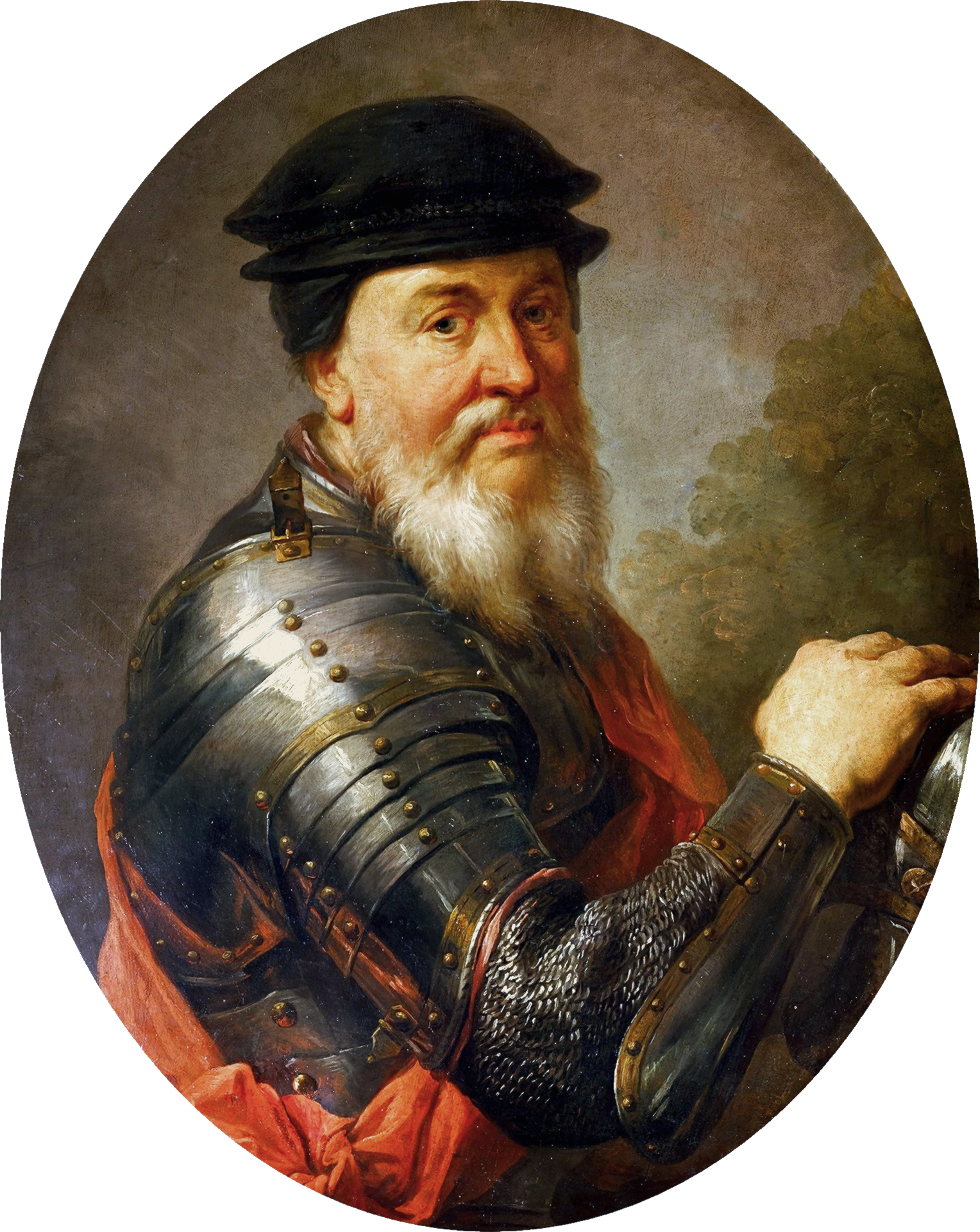
Portrait of Jan Amor Tarnowski, Grand Crown Hetman of Poland, victor of the Battle of Obertyn
Portrait of Jan Amor Tarnowski, Grand Crown Hetman of Poland, victor of the Battle of Obertyn (c. 1550) — Unknown artist (16th c.). Public domain.
Adres wydawniczy: (Drukowano w Krakowie : v Mattheusza Siebeneychera, 1564)Współtwórcy: Ciesielski, Andrzej (15-?),Siebeneicher, Mateusz (?-1582) Druk,Trzecieski, Andrzej (przed 1530-1584)Opis fizyczn
Adres wydawniczy: (Drukowano w Krakowie : v Mattheusza Siebeneychera, 1564)Współtwórcy: Ciesielski, Andrzej (15-?),Siebeneicher, Mateusz (?-1582) Druk,Trzecieski, Andrzej (przed 1530-1584)Opis fizyczn — Marcin Bielski. Public domain.
Replica of a Hussite war wagon (Chudów, Poland)
Replica of a Hussite war wagon (Chudów, Poland) — Ludek. CC BY-SA 3.0.
Jan Amor Tarnowski — related to Battle of Obertyn (1531)
Jan Amor Tarnowski — related to Battle of Obertyn (1531) (c. 1781) — Marcello Bacciarelli. Public domain.
MWP zbroja husarz 16 wiek — related to Battle of Obertyn (1531)
MWP zbroja husarz 16 wiek — related to Battle of Obertyn (1531) (c. 1550) — Unknown authorUnknown author. FAL.
MWP zbroja husarz ujecie 2 16 wiek — related to Battle of Obertyn (1531)
MWP zbroja husarz ujecie 2 16 wiek — related to Battle of Obertyn (1531) (c. 1550) — Unknown authorUnknown author. FAL.
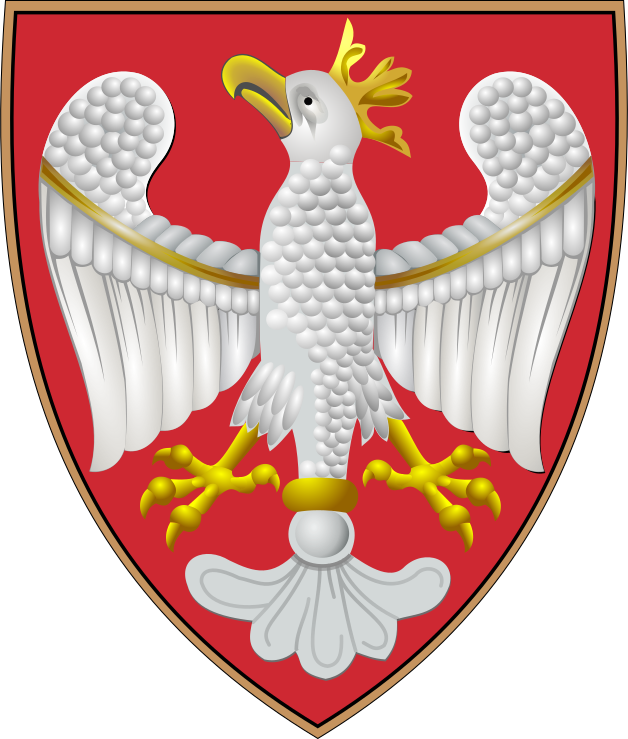
Reconstruction of the coat of arms from the reverse of majestic seal of the King of Poland – Przemysł II from 1295
Reconstruction of the coat of arms from the reverse of majestic seal of the King of Poland – Przemysł II from 1295 (c. 2008) — Bastianow (Bastian). Public domain.
Petru Rareș on the battlefield of Obertyn
Petru Rareș on the battlefield of Obertyn (c. 2020) — Unknown authorUnknown author. Public domain.
Adres wydawniczy: (Drukowano w Krakowie : v Mattheusza Siebeneychera, 1564)Współtwórcy: Ciesielski, Andrzej (15-?),Siebeneicher, Mateusz (?-1582) Druk,Trzecieski, Andrzej (przed 1530-1584)Opis fizyczn
Adres wydawniczy: (Drukowano w Krakowie : v Mattheusza Siebeneychera, 1564)Współtwórcy: Ciesielski, Andrzej (15-?),Siebeneicher, Mateusz (?-1582) Druk,Trzecieski, Andrzej (przed 1530-1584)Opis fizyczn — Marcin Bielski. Public domain.
Replica of a Hussite war wagon (Chudów, Poland)
Replica of a Hussite war wagon (Chudów, Poland) — Ludek. CC BY-SA 3.0.
Jan Amor Tarnowski — related to Battle of Obertyn (1531)
Jan Amor Tarnowski — related to Battle of Obertyn (1531) (c. 1781) — Marcello Bacciarelli. Public domain.
MWP zbroja husarz 16 wiek — related to Battle of Obertyn (1531)
MWP zbroja husarz 16 wiek — related to Battle of Obertyn (1531) (c. 1550) — Unknown authorUnknown author. FAL.
MWP zbroja husarz ujecie 2 16 wiek — related to Battle of Obertyn (1531)
MWP zbroja husarz ujecie 2 16 wiek — related to Battle of Obertyn (1531) (c. 1550) — Unknown authorUnknown author. FAL.
Reconstruction of the coat of arms from the reverse of majestic seal of the King of Poland – Przemysł II from 1295
Reconstruction of the coat of arms from the reverse of majestic seal of the King of Poland – Przemysł II from 1295 (c. 2008) — Bastianow (Bastian). Public domain.
Petru Rareş (1527-1538, 1541-1546). A follower of the Slavonic church and culture, he applied the policy of strengthening the central power, an anti-Turkish policy with the support of minor boyars and
Petru Rareş (1527-1538, 1541-1546). A follower of the Slavonic church and culture, he applied the policy of strengthening the central power, an anti-Turkish policy with the support of minor boyars and (c. 1995) — Post of Moldova. Public domain.
Petru Rareș on the battlefield of Obertyn
Petru Rareș on the battlefield of Obertyn (c. 2020) — Unknown authorUnknown author. Public domain.

Significance & Legacy

Permanently ended Moldavian attempts to hold Pokutia; the province was reconquered by Poland. Demonstrated the tactical superiority of combined arms and early modern defensive strategies over massed cavalry.

Frequently Asked Questions

When was the Battle of Obertyn?
The Battle of Obertyn took place in 1531. Aug 22, 1531.
Who won the Battle of Obertyn?
The Kingdom of Poland were victorious against the Principality of Moldavia.
What was the significance of the Battle of Obertyn?
Permanently ended Moldavian attempts to hold Pokutia; the province was reconquered by Poland. Demonstrated the tactical superiority of combined arms and early modern defensive strategies over massed cavalry.

Related Battles

Battle of Verbia1561 · Iacob Heraclid (Despot) & Olbracht Łaski victoryBattle of Cecora1620 · Ottoman Empire & Crimean Tatars victoryBattle of Khotyn1621 · Polish-Lithuanian Commonwealth & Cossacks victoryBattle of Jiliște1574 · Moldavia & Zaporozhian Cossacks victoryBattle of Cahul1574 · Ottoman Empire & Wallachia victoryBattle of Călugăreni1595 · Wallachia & Transylvanian Allies victory
View all Early Modern Era battles →
Wikipedia (English)Wikidata← Back to Atlas