HomeAll BattlesHistorical Periods
  1. Home
  2. ›
  3. Communist Era Resistance
  4. ›
  5. Brașov Revolt

Brașov Revolt(1987)

Explore on Interactive Map
Nov 15, 1987·Securitate + Militia victory·urban·urban

Background

Ceaușescu's accelerated debt repayment program created catastrophic shortages of food, heat, and electricity throughout Romania. November 15 was also a local election day, adding symbolic weight to the workers' act of public defiance.

Campaign: Urban Industrial Uprisings 1977–1987

Forces Engaged

Memorial to the Romanian Revolution of 1989 in Timișoara — honoring the victims of communist repression
Memorial to the Romanian Revolution of 1989 in Timișoara — honoring the victims of communist repression (c. 2010) — Wikimedia Commons. CC BY-SA 4.0.
Defeated
Steagul Roșu/Tractorul factory workers + Brașov citizens
Commander: Spontan — niciun lider identificat
Strength: 17,500
Victor
Securitate + Militia
Commander: Comandanții locali ai Securității (identități clasificate după eveniment)

The Battle

Historical photograph from the Romanian communist era — Brașov Revolt (1987)
Historical photograph from the Romanian communist era — Brașov Revolt (1987) (c. 1987) — Various, see File History below for details.. Public domain.

Romania's largest uprising before December 1989. Erupting on local election day at Brașov's Steagul Roșu truck plant, triggered by severe wage cuts and chronic food shortages, it rapidly escalated: workers stormed the Communist Party headquarters, destroyed party documents and Ceaușescu portraits, and openly chanted "Jos Ceaușescu!" and "Jos Comunismul!" while singing 1848 Revolution anthems.

The Brașov rebellion of November 1987 was a workers' revolt against the communist regime in Romania. Triggered by severe wage cuts and chronic food shortages, workers from the Steagul Roșu truck plant stormed the Communist Party headquarters, destroyed party documents and Ceaușescu portraits, and chanted anti-regime slogans. It was the largest popular uprising in Romania before the December 1989 revolution.

Casualties & Outcome

0 confirmed deaths; hundreds beaten during suppression; hundreds arrested and tortured; up to 60 sentenced to forced labor

Securitate + Militia achieved victory over Steagul Roșu/Tractorul factory workers + Brașov citizens.

Up to 60 participants sentenced to forced labor and internal deportation. Security forces suppressed the rebellion the same day. The event was censored from Romanian media but broadcast by Radio Free Europe, spreading awareness across the country.

Historical Record

La Liberté guidant le peuple - Eugène Delacroix - Musée du Louvre Peintures RF 129 - après restauration 2024 — related to Brașov Revolt (1987)
La Liberté guidant le peuple - Eugène Delacroix - Musée du Louvre Peintures RF 129 - après restauration 2024 — related to Brașov Revolt (1987) (c. 1830) — Eugène Delacroix. Public domain.
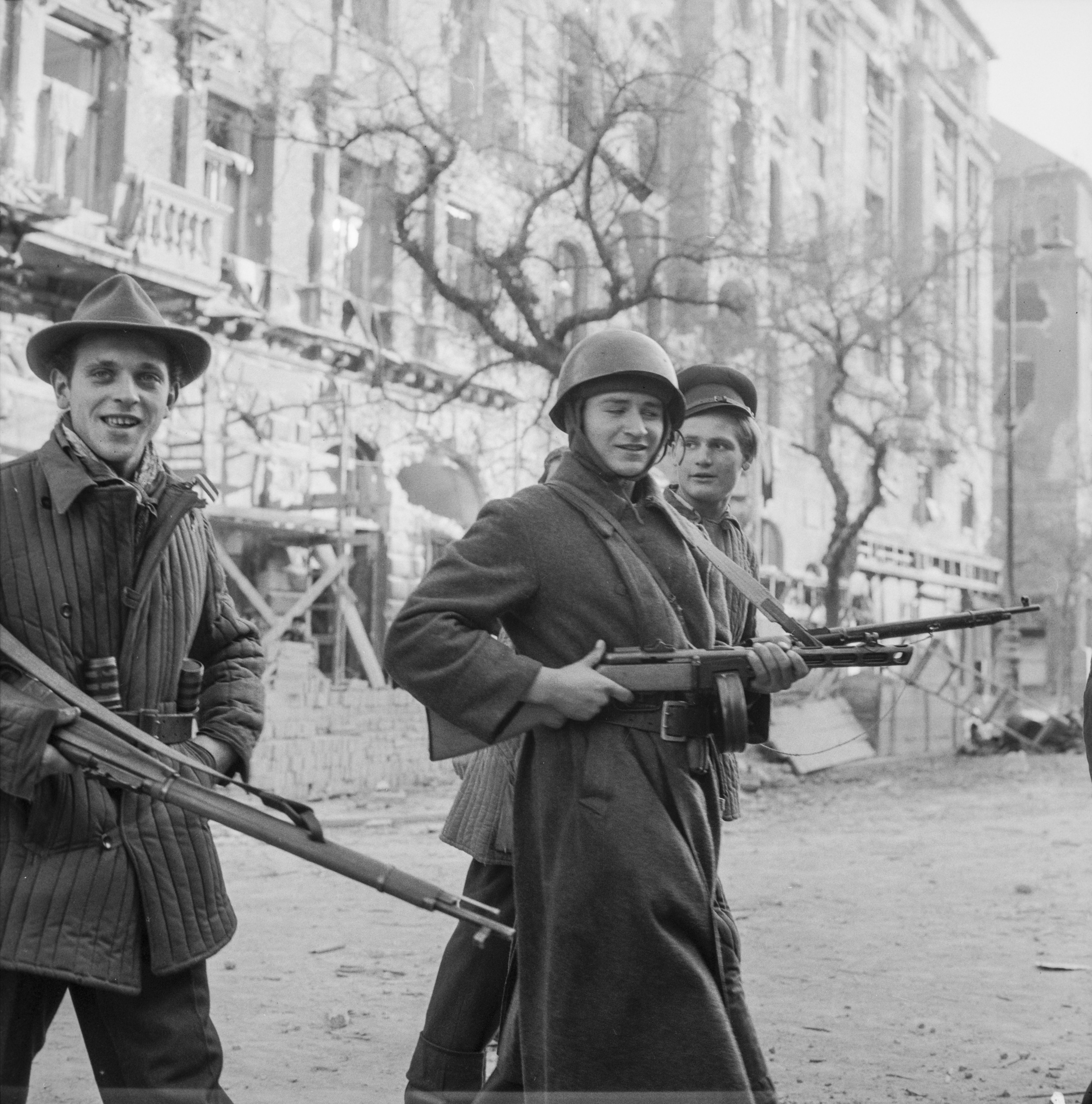
Ungarn Aufstand, Junge Revolutionäre auf dem József körút, Budapest
Ungarn Aufstand, Junge Revolutionäre auf dem József körút, Budapest (c. 1956) — Jack Metzger. CC BY-SA 4.0.
Flyer - 1956 Hungarian Revolution. Imre Nagy, Head of the Hungarian Government.
Flyer - 1956 Hungarian Revolution. Imre Nagy, Head of the Hungarian Government. (c. 1956) — Government of Nagy Imre. Public domain.
Suspected ÁVH agents digging in search of mass grave of Stalinist repressions and underground escape tunnels at Republic Square, Budapest.
Suspected ÁVH agents digging in search of mass grave of Stalinist repressions and underground escape tunnels at Republic Square, Budapest. (c. 1956) — FOTO:Fortepan — ID 24518: Adományozó/Donor: Nagy Gyula. archive copy at the Wayback Machine. CC BY-SA 3.0.
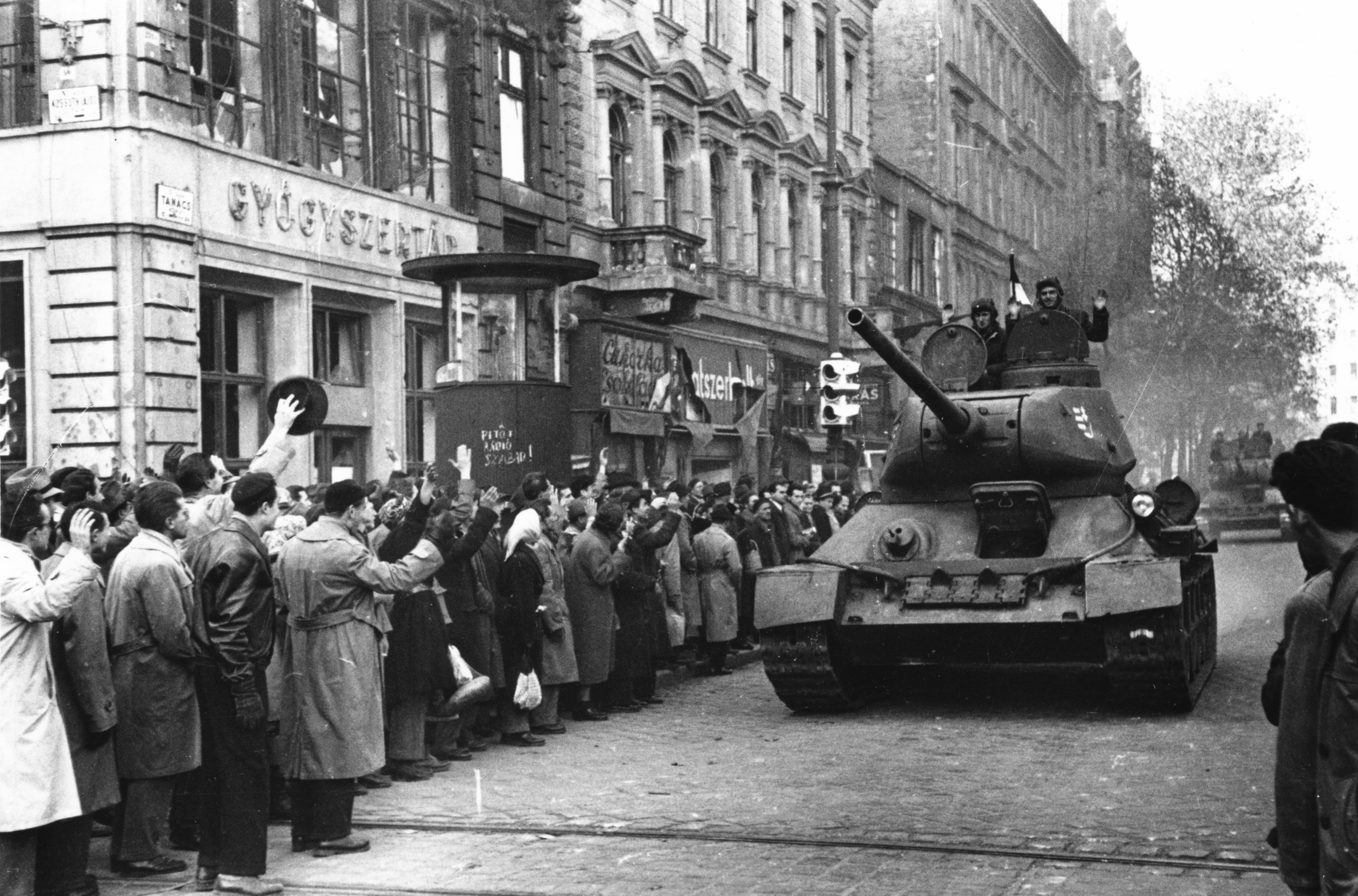
Kossuth Lajos utca - Károly (Tanács) körút sarok.
Kossuth Lajos utca - Károly (Tanács) körút sarok. (c. 1956) — FOTO:Fortepan — ID 23591: Adományozó/Donor: Pesti Srác2. archive copy at the Wayback Machine. CC BY-SA 3.0.
Invasion of Czechoslovakia collage:  		 			 			Student protesters passing by a burning Soviet tank in Prague 		 		 			 			Hippies' inscriptions made on a Soviet military vehicle in Prague
Invasion of Czechoslovakia collage: Student protesters passing by a burning Soviet tank in Prague Hippies' inscriptions made on a Soviet military vehicle in Prague (c. 2025) — Главцентроархив. CC0.
Nicolae Ceauşescu (right) visiting Czechoslovakia in 1968; here, with Alexander Dubček and Ludvik Svoboda
Nicolae Ceauşescu (right) visiting Czechoslovakia in 1968; here, with Alexander Dubček and Ludvik Svoboda (c. 1968) — unknown, image comes from the Romanian National Archives. Attribution.
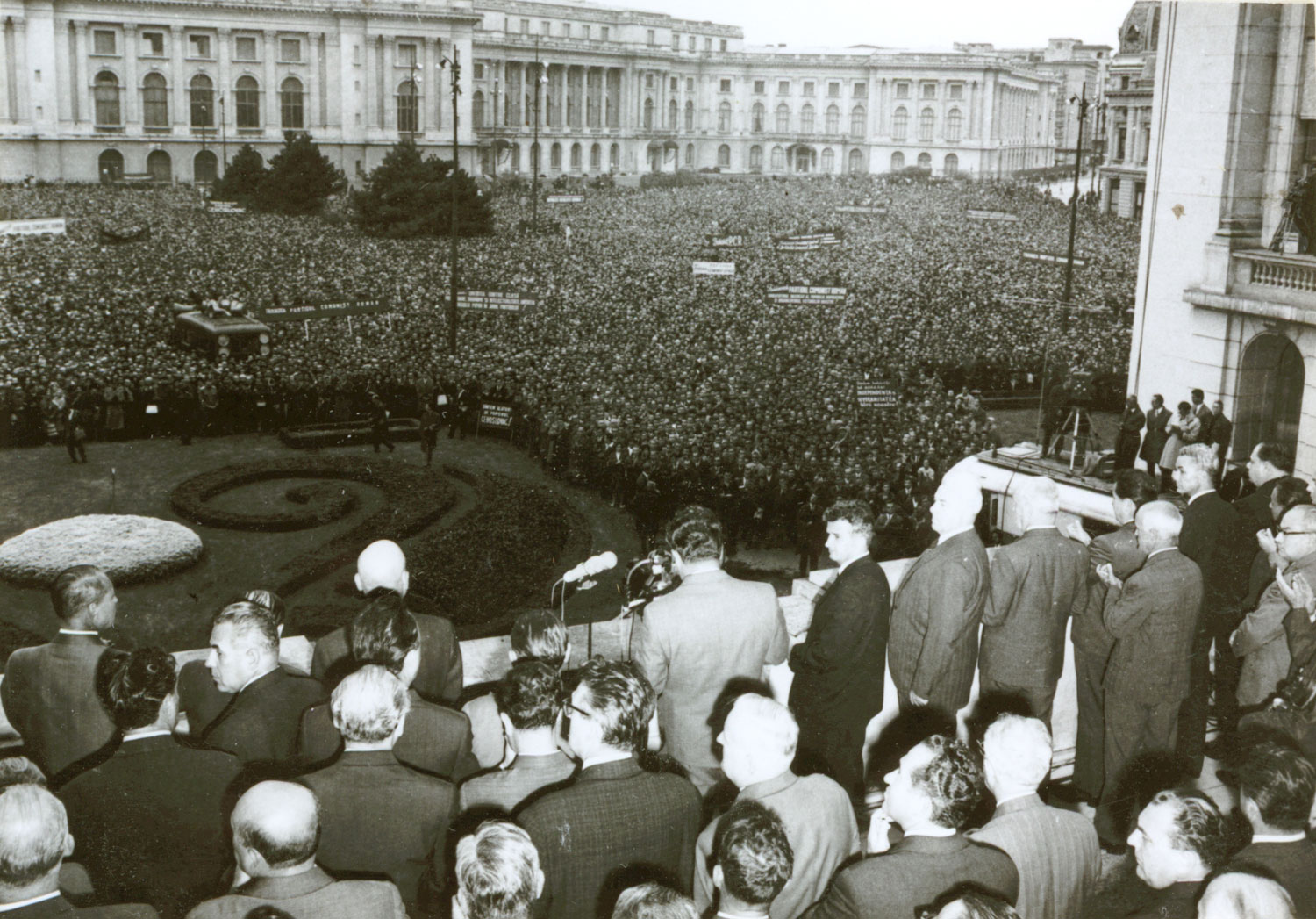
Ceaucescu's government opposed sharply the occupation of Czechoslovakia from the beginning. On this photo, the Romanian communist party officially denounces it.
Ceaucescu's government opposed sharply the occupation of Czechoslovakia from the beginning. On this photo, the Romanian communist party officially denounces it. (c. 1968) — image from the Romanian National Archives. Attribution.
Pamätná doska na bývalom Tuzexe na Hlavnej ulici v Košiciach, kde bolo 21. augusta 1968 zabitých šesť obyvateľov mesta
Pamätná doska na bývalom Tuzexe na Hlavnej ulici v Košiciach, kde bolo 21. augusta 1968 zabitých šesť obyvateľov mesta (c. 2006) — Marián Gladiš. CC BY-SA 3.0.
Orzeł Wojsk Lądowych RP
Orzeł Wojsk Lądowych RP (c. 2006) — Poznaniak. Public domain.
Orzeł Sił Powietrznych RP
Orzeł Sił Powietrznych RP (c. 2006) — Poznaniak. CC BY-SA 3.0.
For documentary purposes the German Federal Archive often retained the original image captions, which may be erroneous, biased, obsolete or politically extreme. Zentralbild/Koard 3.6.1969 Moskau: Dele
For documentary purposes the German Federal Archive often retained the original image captions, which may be erroneous, biased, obsolete or politically extreme. Zentralbild/Koard 3.6.1969 Moskau: Dele (c. 1969) — Koard, Peter. CC BY-SA 3.0 de.
am Exerzierplatz, Ecke Ziegelteich. Bannertext: "VIETNAM UND PRAG | UNRECHT DES STÄRKEREN".
am Exerzierplatz, Ecke Ziegelteich. Bannertext: "VIETNAM UND PRAG | UNRECHT DES STÄRKEREN". (c. 1968) — Magnussen, Friedrich (1914–1987). CC BY-SA 3.0 de.
Invasion of Czechoslovakia collage:  		 			 			Student protesters passing by a burning Soviet tank in Prague 		 		 			 			Hippies' inscriptions made on a Soviet military vehicle in Prague
Invasion of Czechoslovakia collage: Student protesters passing by a burning Soviet tank in Prague Hippies' inscriptions made on a Soviet military vehicle in Prague (c. 2025) — Главцентроархив. CC0.
Nicolae Ceauşescu (right) visiting Czechoslovakia in 1968; here, with Alexander Dubček and Ludvik Svoboda
Nicolae Ceauşescu (right) visiting Czechoslovakia in 1968; here, with Alexander Dubček and Ludvik Svoboda (c. 1968) — unknown, image comes from the Romanian National Archives. Attribution.
Ceaucescu's government opposed sharply the occupation of Czechoslovakia from the beginning. On this photo, the Romanian communist party officially denounces it.
Ceaucescu's government opposed sharply the occupation of Czechoslovakia from the beginning. On this photo, the Romanian communist party officially denounces it. (c. 1968) — image from the Romanian National Archives. Attribution.
Pamätná doska na bývalom Tuzexe na Hlavnej ulici v Košiciach, kde bolo 21. augusta 1968 zabitých šesť obyvateľov mesta
Pamätná doska na bývalom Tuzexe na Hlavnej ulici v Košiciach, kde bolo 21. augusta 1968 zabitých šesť obyvateľov mesta (c. 2006) — Marián Gladiš. CC BY-SA 3.0.
Orzeł Wojsk Lądowych RP
Orzeł Wojsk Lądowych RP (c. 2006) — Poznaniak. Public domain.
Orzeł Sił Powietrznych RP
Orzeł Sił Powietrznych RP (c. 2006) — Poznaniak. CC BY-SA 3.0.
For documentary purposes the German Federal Archive often retained the original image captions, which may be erroneous, biased, obsolete or politically extreme. Zentralbild/Koard 3.6.1969 Moskau: Dele
For documentary purposes the German Federal Archive often retained the original image captions, which may be erroneous, biased, obsolete or politically extreme. Zentralbild/Koard 3.6.1969 Moskau: Dele (c. 1969) — Koard, Peter. CC BY-SA 3.0 de.
am Exerzierplatz, Ecke Ziegelteich. Bannertext: "VIETNAM UND PRAG | UNRECHT DES STÄRKEREN".
am Exerzierplatz, Ecke Ziegelteich. Bannertext: "VIETNAM UND PRAG | UNRECHT DES STÄRKEREN". (c. 1968) — Magnussen, Friedrich (1914–1987). CC BY-SA 3.0 de.

Significance & Legacy

First time Romanian workers publicly chanted direct anti-Ceaușescu slogans. Broke the psychological barrier of fear and is considered the direct precursor to the December 1989 revolution. Ceaușescu's response — increasing food rationing and surveillance — accelerated the crisis.

Frequently Asked Questions

When was the Brașov Revolt?
The Brașov Revolt took place in 1987. Nov 15, 1987.
Who won the Brașov Revolt?
The Securitate + Militia were victorious against the Steagul Roșu/Tractorul factory workers + Brașov citizens.
What was the significance of the Brașov Revolt?
First time Romanian workers publicly chanted direct anti-Ceaușescu slogans. Broke the psychological barrier of fear and is considered the direct precursor to the December 1989 revolution. Ceaușescu's response — increasing food rationing and surveillance — accelerated the crisis.

Related Battles

Jiu Valley Miners' Strike1977 · Romanian Communist Party + Securitate victoryManiu Guards Operations (Sumanele Negre)1945 · Soviet Red Army + Romanian Communist authorities victoryIon Gavrilă-Ogoranu Group — Făgăraș Mountains1948 · Securitate victoryHaiducii Muscelului — Toma Arnăuțoiu Group1949 · Securitate + Directorate for Security Troops victoryAnti-Collectivization Revolts — Bihor / Arad1949 · Securitate + Militia + Security Troops victoryVadu Roșca Revolt1957 · Securitate + Romanian Army victory
View all Communist Era Resistance battles →

Sources

  • enrs.eu
  • wikipedia.org
  • wilsoncenter.org
Wikipedia (English)← Back to Atlas