Advance to the Vraca Line(1913)
Approximate site. The pin marks a locally accepted site or a nearby anchor point, not a survey-grade position.
Vratsa (Vraca), Bulgaria
Coordinate source: Vratsa GPS 43.21, 23.55
Background
The advance was deliberately a demonstration of force rather than a battle of annihilation — Romania wanted territorial concessions, not prolonged war. Proximity to Sofia was the decisive political lever.
Campaign: Second Balkan War 1913
Forces Engaged
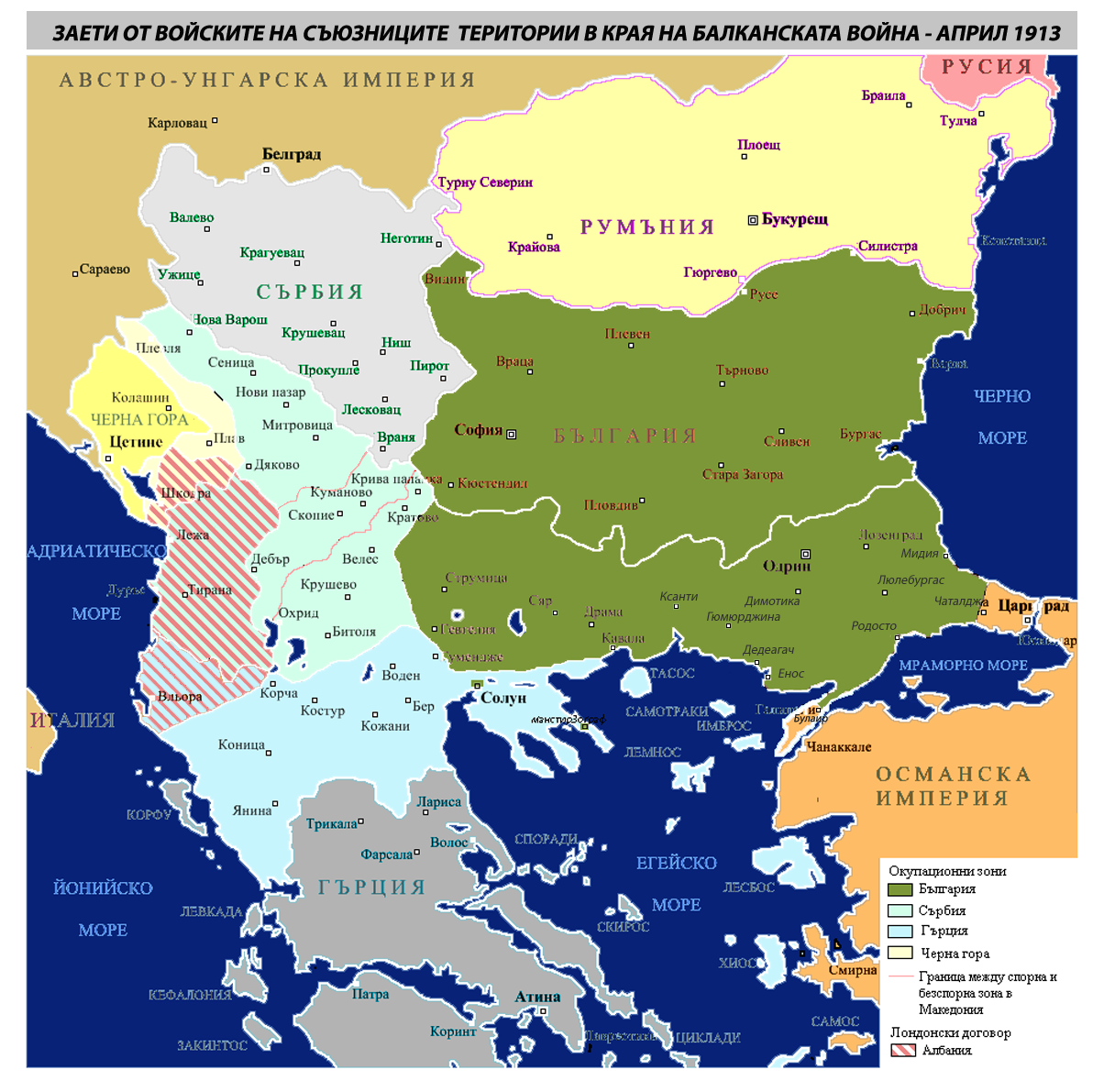
The Battle
Romanian forces advanced to within 50 km of Sofia before an armistice was declared.
In July 1913, during the Second Balkan War, Romanian forces launched an advance toward the Vraca Line. Romanian columns, supported by cavalry that reached Vrazhdebna, just 11 km from Sofia, converged on the Vratsa gorge within the western Balkan Mountain foothills. Facing a rapid Romanian advance, Bulgarian forces withdrew. The four-day engagement resulted in a Romanian victory, pushing them within 50 km of Sofia and compelling Bulgaria to accept the Treaty of Bucharest.
Casualties & Outcome
~100 Romanian (predominantly cholera); ~500 Bulgarian (rear-guard skirmishes)
Romania achieved victory over Bulgaria.
Occupation of Vratsa (Jul 20) brought the army within 116 km of Sofia. Romanian cavalry at Vrazhdebna forced Bulgaria to request armistice on July 30.
Historical Record

Significance & Legacy
The threat to Sofia forced Bulgaria to accept the Treaty of Bucharest.
Frequently Asked Questions
- When was the Advance to the Vraca Line?
- The Advance to the Vraca Line took place in 1913. Jul 15–18, 1913.
- What was the outcome of the Advance to the Vraca Line?
- The Romania were victorious against the Bulgaria.
- What was the significance of the Advance to the Vraca Line?
- The threat to Sofia forced Bulgaria to accept the Treaty of Bucharest.