HomeAll BattlesHistorical Periods
  1. Home
  2. ›
  3. Second Balkan War
  4. ›
  5. Advance into Bulgaria

Advance into Bulgaria(1913)

Explore on Interactive Map
Jul 10–18, 1913·Romania victory·land·northern Bulgarian plain, Danubian lowlands

Background

Since Greece's main military effort was initially directed toward Macedonia on the Epir front, the Greek army was numerically outmatched by the Ottoman Yanya Corps at the outbreak of hostilities in October 1912. After the initial attack by Ottoman commander Esat Pasha was halted at Gribovo, the Greeks succeeded in liberating Preveza (21 October) and pushed the front northward toward Ioannina, repelling an Ottoman attack at Pente Pigadia (Beshpinar). On 5 November, a small force from Corfu made a landing and captured the coastal area of Himaria without encountering significant resistance, and on 20 December Greek troops improved their positions in Epir and entered Korçë, north of Ioannina, the last supply route and thereby threatening the northeast flank of the city. The natural terrain south of Ioannina provided the Ottomans with exceptional defensive opportunities.

Campaign: Second Balkan War 1913

Forces Engaged

Romanian forces crossing the Danube near Zimnicea during the Second Balkan War, 1913
Romanian forces crossing the Danube near Zimnicea during the Second Balkan War, 1913 (c. 1913) — Unknown author (1913). Public domain.
Victor
Romania
Commander: Gen. Averescu
Strength: 80,000
Defeated
Bulgaria
Commander: Various
Strength: 35,000

The Battle

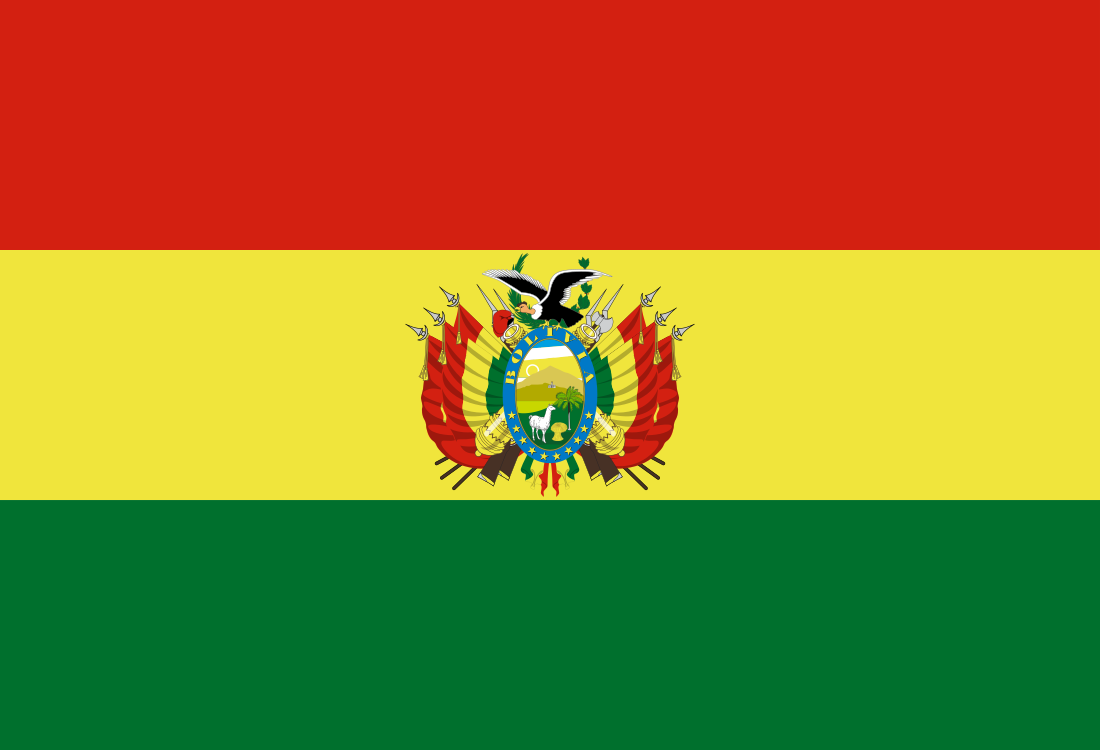
Flag of Bolivia (State).
Flag of Bolivia (State). (c. 1851) — See File history, below, for details.. Public domain.

Romania entered the Second Balkan War with a massive advance south, meeting minimal resistance from an exhausted Bulgaria.

alt=|miniatura|| Plan of Greek troop movements that led to the fall of the city of Ioannina. After this new failure, Sapountzakis was released from his command and replaced by the crowned prince Constantin I. Constantin carefully increased his forces, bringing more men and additional artillery pieces. The prince formulated a new plan, under which his army would attack Bizani from the southeast, while the main effort would actually be directed toward the southwest flank of the fortified area. The Greek artillery began a preparatory bombardment on March 4, continuing throughout the day. It is estimated that the Greeks fired 150 rounds in this bombardment, while Ottoman counter-fire was hindered by the lack of ammunition. The assault was launched on [date], with three Greek infantry divisions—the 4th, 6th, and 8th Infantry Divisions—focusing on the eastern and western sectors of the defensive perimeter.

Casualties & Outcome

1,600
Romania
casualties
6,000
Bulgaria
casualties

All 1,600 Romanian deaths from cholera, not combat. Bulgarian losses negligible — no major engagements.

Romania achieved victory over Bulgaria.

alt=Ottoman prisoners captured by the Greek army.|miniatura|| Ottoman prisoners. After the battle, the Greek army captured approximately 8,600 prisoners. During the battle, 2,800 Ottomans were killed, while the Greeks suffered much lighter losses, with 500 dead and wounded. The Greeks also captured approximately 8,600 detainees, while the rest of the Ottoman garrison managed to retreat to Albania. The Greeks captured 108 artillery pieces and large quantities of supplies. Greek forces entered Gjirokastër and Delvinë and captured Tepelenë the following day. By the end of the war, they had reached a line stretching from the Ceraunian Mountains (north of Himara) along the coast of the Ionian Sea to Lake Prespa in the east. The success on the Epirus front allowed the Greek high command to transfer part of the army to Salonica, thus preparing for a confrontation against the Bulgarians.

Historical Record

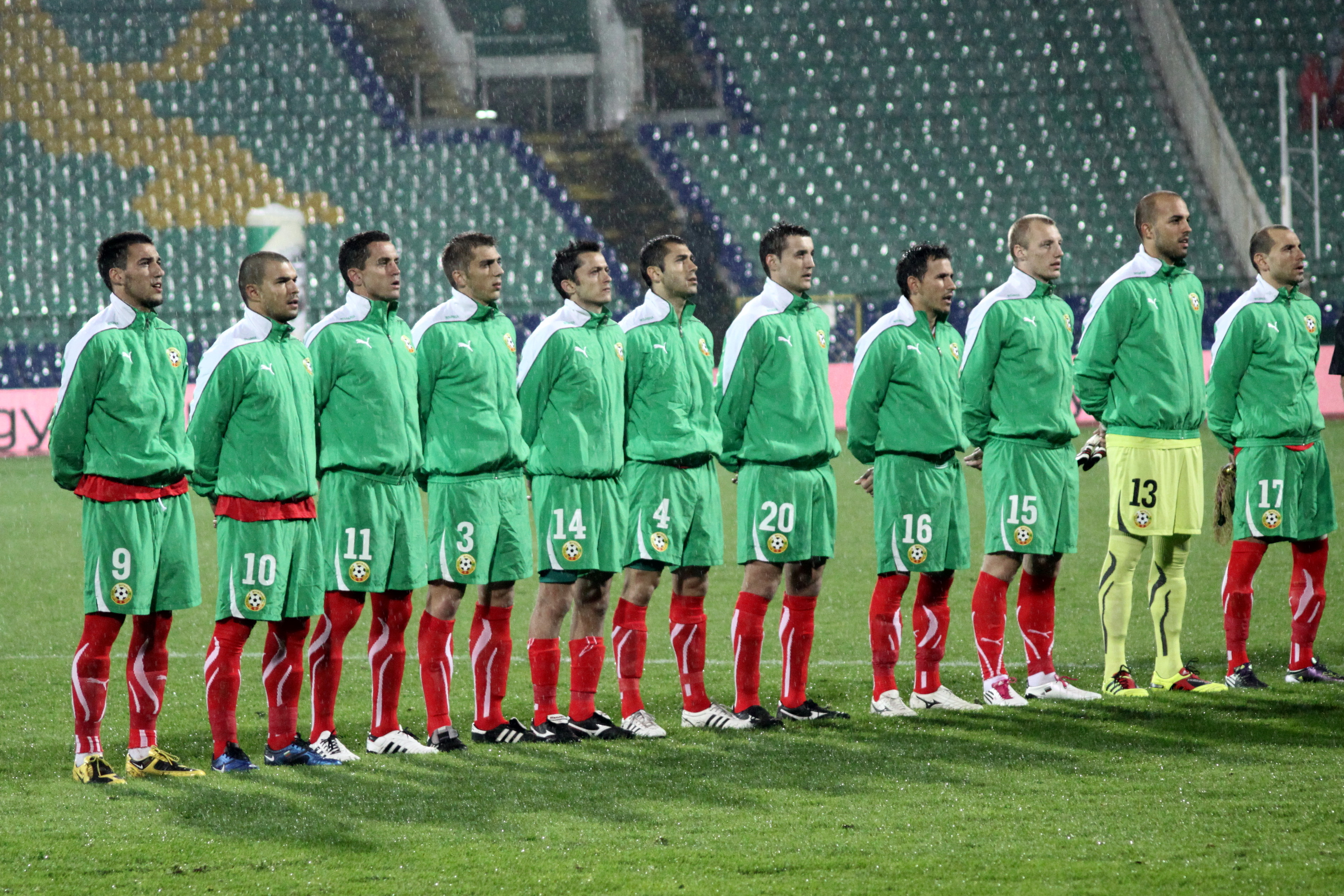
Bulgarian national football team. Photo taken before a qualification match for Euro 2012 with Switzerland national team, March 26, 2011, Vasil Levski National Stadium, Sofia, Bulgaria.
Bulgarian national football team. Photo taken before a qualification match for Euro 2012 with Switzerland national team, March 26, 2011, Vasil Levski National Stadium, Sofia, Bulgaria. (c. 2011) — Biso. CC BY 3.0.
Bulgarian national football team 2010
Bulgarian national football team 2010 (c. 2010) — Biso. CC BY 3.0.
Dimitar Berbatov bei Pirin Blagoevgrad . © 2007 Konstantin Temelkov (http://www.blagoevgrad.info)
Dimitar Berbatov bei Pirin Blagoevgrad . © 2007 Konstantin Temelkov (http://www.blagoevgrad.info) (c. 2007) — Temelkoff. CC BY-SA 3.0.
For documentary purposes the German Federal Archive often retained the original image captions, which may be erroneous, biased, obsolete or politically extreme. ADN-ZB-AP-Tele-15.6.74-ma-BRD-Düsseldor
For documentary purposes the German Federal Archive often retained the original image captions, which may be erroneous, biased, obsolete or politically extreme. ADN-ZB-AP-Tele-15.6.74-ma-BRD-Düsseldor (c. 1974) — Unknown authorUnknown author. CC BY-SA 3.0 de.
Berbatov 9 — related to Advance into Bulgaria (1913)
Berbatov 9 — related to Advance into Bulgaria (1913) (c. 2011) — Flickr user nasmac. CC BY-SA 2.0.
Clockwise: Senghenydd colliery disaster Construction of Canberra begin 1913 Ottoman coup d'état Second Balkan War Great Flood of 1913 Great Lakes Storm of 1913 Second Revolution (Republic of China) En
Clockwise: Senghenydd colliery disaster Construction of Canberra begin 1913 Ottoman coup d'état Second Balkan War Great Flood of 1913 Great Lakes Storm of 1913 Second Revolution (Republic of China) En (c. 2023) — From a variety of images credited above.. CC0.
Map of the Second Balkan War  Movimientos y unidades búlgaras  Movimientos y unidades serbias, griegas, rumanas y otomanas   Dobruya meridional a Rumanía (Tratado de Bucarest, 13/8/1913)  Fronteras re
Map of the Second Balkan War  Movimientos y unidades búlgaras  Movimientos y unidades serbias, griegas, rumanas y otomanas   Dobruya meridional a Rumanía (Tratado de Bucarest, 13/8/1913)  Fronteras re (c. 2019) — Kandi, Rowanwindwhistler. CC BY-SA 3.0.

Significance & Legacy

Treaty of Bucharest (1913) awarded Southern Dobruja to Romania.

Frequently Asked Questions

When was the Advance into Bulgaria?
The Advance into Bulgaria took place in 1913. Jul 10–18, 1913.
Who won the Advance into Bulgaria?
The Romania were victorious against the Bulgaria.
What was the significance of the Advance into Bulgaria?
Treaty of Bucharest (1913) awarded Southern Dobruja to Romania.

Related Battles

Danube Crossing at Bechet1913 · Romania victoryOccupation of Southern Dobruja1913 · Romania victoryOccupation of Ferdinand1913 · Romania victoryRomanian Advance on Sofia1913 · Romania (Danube Army) victoryAdvance to the Vraca Line1913 · Romania victory
View all Second Balkan War battles →

Sources

  • Hall, R.C. — The Balkan Wars 1912–1913
  • Hitchins, K. — Romania 1866–1947
← Back to Atlas