Romanian Advance into Transylvania(1918)
Approximate site. The pin marks a locally accepted site or a nearby anchor point, not a survey-grade position.
Cluj-Napoca — Romanian forces entered Dec 24, 1918
Coordinate source: Wikipedia Cluj-Napoca
Background
The Armistice of November 11 and dissolution of Austria-Hungary created a vacuum in Transylvania. Romania re-entered the war to enforce Allied-approved occupation lines and respond to the Transylvanian Romanian National Assembly's declaration of union.
Campaign: Unification Campaign 1918-19
Forces Engaged
The Battle

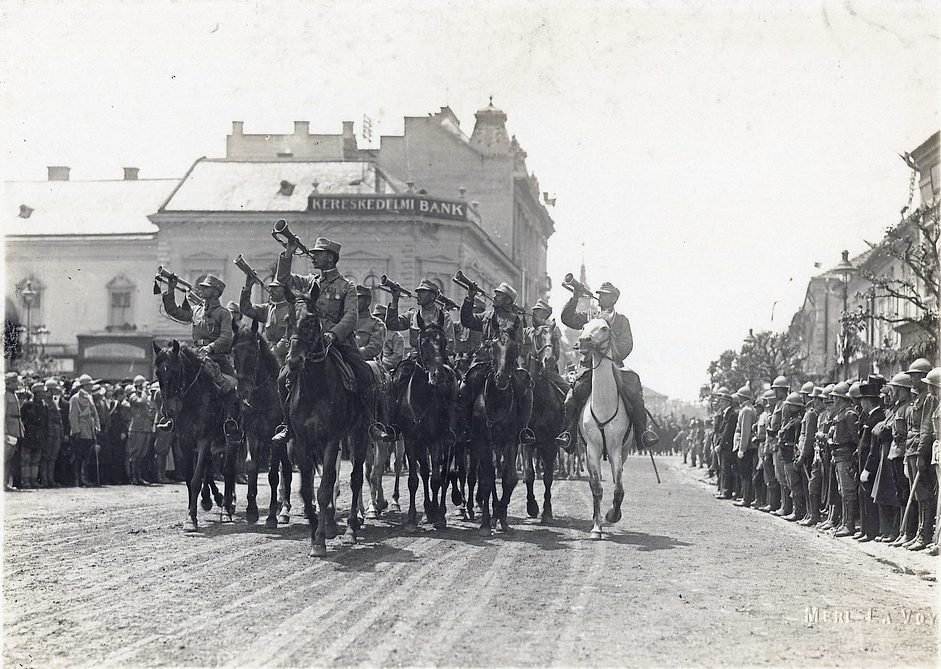
Romanian forces advanced into Transylvania post-Armistice, entering Cluj on December 24.
Romanian forces advanced into Transylvania following the November 1918 Armistice, securing the region through a broad-front advance from the Carpathian passes to the Transylvanian plateau. The campaign established military control before the Paris Peace Conference.
Casualties & Outcome
~1,000 total (Romanian); ~2,000 total including captures (Hungarian)
Romania achieved victory over Hungary.
Romanian forces captured Cluj on December 24 and by January 1919 controlled all territory to the Mureș River, underpinning the Act of Union of December 1, 1918.
Historical Record


Significance & Legacy
Established military control before the Paris Peace Conference, shaping the Treaty of Trianon.
Frequently Asked Questions
- When was the Romanian Advance into Transylvania?
- The Romanian Advance into Transylvania took place in 1918. Nov 13–Dec 24, 1918.
- What was the outcome of the Romanian Advance into Transylvania?
- The Romania were victorious against the Hungary.
- What was the significance of the Romanian Advance into Transylvania?
- Established military control before the Paris Peace Conference, shaping the Treaty of Trianon.